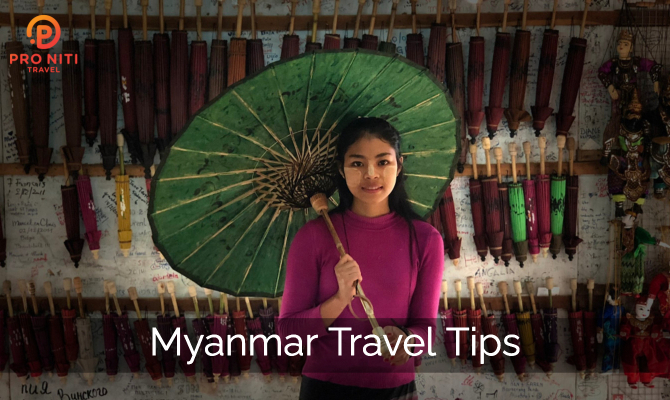
Myanmar Travel Agent | Myanmar Tour Operator For Adventure & Luxury
Pro-Niti-Site-Banner- Pro-Niti-Site-Banner-
Be Careful When you travel to Myanmar: Travel Tips

Myanmar is very famous for its people, their culture, ancient history and beautiful landscape. As a traveler, one should be aware those travel tips before coming to Myanmar so that there won’t any conflict with communities, don’t get culture shock and travel responsibly.

Here are Myanmar travel tips you should know. Http://www.dosanddontsfortourists.com/ develops the following tips.


dos and donts in myanmar 1

One of the things every traveler noticed and commented is “Myanmar people are super friendly.” , willing to help travelers and so welcoming to their guests. We recommend learning some Burmese words, just ” Mingalarpar” when you meet Myanmar people and will get rapport.


dos and donts in myanmar 2

Myanmar is very diverse and lots of history to learn. There are over 100 ethnic groups in Myanmar, and every ethnic group has their language, traditions, culture. Learn them and try to adapt, you are in Myanmar.


dos and donts in myanmar 3

Love to take the photo, come to Myanmar whether for landscape, people, festivals, or even wildlife. But, be aware that you should not take the photo of women taking a shower. Myanmar is friendly, but they are shy, too. 🙂


dos and donts in myanmar 4

Again, smiling faces is what makes Myanmar people lovely and famous among the tourists. We love to smile and like to see the smile. So, don’t forget to smile. Smile, Smile, and Smile.


dos and donts in myanmar 5Don’t point with your foot. This manner is what you should be careful in Myanmar. People hate this kind of behavior and feel disrespectful.


dos and donts in myanmar 6

Myanmar people are very religious, and Buddhism influenced culture. When you are visiting monasteries, pagodas or any holy places, please do wear decent clothes. You have to take off your shoes and socks when you are visiting pagodas, monasteries, and other sacred sites.


dos and donts in myanmar 7

Again, when you visit Pagoda or any holy places, you should aware not to stretch out your legs and lay down and relax in front of Buddha statue. This kind of behavior indicates the disrespects to Buddha and Buddhism people surely do not like. So please be aware that never face your feet to the Buddha


dos and donts in myanmar 8

Different country has different cultures on its own. We, Myanmar people, entirely dislike touching head because Myanmar people regard head as a noble part of human body part.


dos and donts in myanmar 9 As you travel around the world, you may learn the sweet words like “Konnichiwa” or “Ni Hao”. As in Myanmar, saying “Ce Su Tin Ba De” whenever you receive the service from someone is the sweetest and lovest manner for Myanmar people.


dos and donts in myanmar 10

Myanmar citizens are very polite and hospitable, so tourists do not need to worry about their security and safety. But women travelers should dress decently while traveling around as Myanmar traditions and customs; women have their dignity.


dos and donts in myanmar 11

In Myanmar, kissing in public is an inappropriate and impolite manner, so that avoid kissing in public area especially in old-aged people.


dos and donts in myanmar 12

If you reach Pagodas or monasteries, you can see people meditating in silence. Meditating is a way to reduce stress, anxiety, depression, and pain to achieve a mentally clear and emotionally calm state so while they meditation or praying, intentionally or inadvertently disturbing their peace would be rude. Please be aware of talking loudly and carelessly, asking questions to them and taking loads of photographs.


dos and donts in myanmar 13

When you want to ask something or call somebody, avoid calling with your finger up because such manner would be calling for a one-to-one challenge and it is rude to do.


dos and donts in myanmar 14

Again, travelers should know the local customs of the ethnic group before a visit to such ethnic villages because each ethnic group has its major customs and traditions.


dos and donts in myanmar 15

Trishaw, boat and horse cart is an old mode of transport in Myanmar and still active nowadays. Trying the traditional transport facilities is not only can support the locals but also practice the sustainable way of transportation.


dos and donts in myanmar 16

Although it is the ridiculous circumstance to declare the electricity shortages in some season but travelers alert to an unusual situation of Myanmar.


dos and donts in myanmar 17

Such a rude manner is that you touch the robe of a monk so avoid touching the monks and their robe.


dos and donts in myanmar 18

Please be careful of buying precious and expensive items at the local market as it cannot guarantee the authenticity of that items. Instead of purchasing valuable things like gems and jewelry at the local market, you should buy at licensed stores that can ensure their selling item.


dos and donts in myanmar 19

There are twelve main festivals and various kinds of ceremonies celebrated in all over Myanmar. You are warmly welcome to these celebrations while learning Myanmar Culture and Traditions. Come and enjoy with us.


dos and donts in myanmar 20

When tourists want to exchange their foreign currency, they should use the official exchange counters, and banks and most of them are situated along the roadside of the main road. Do not trust the agent and they are not reliable.


dos and donts in myanmar 21

Giving a hand to local people is much appreciated. Instead, a wise direct contribution to local communities is more efficient for the natives.


dos and donts in myanmar 22

Better saying to ask locally for donation.Rather than giving money, sweets or pencil,  we would appreciate your opinion about bringing useful things for the villagers that perhaps do not get many visitors.


dos and donts in myanmar 23As the world knows the hospitality of Myanmar people, they will be pleased if tourists participate in their festivals and join with them. Feel as locals and celebrate and make them proud of their traditions.


dos and donts in myanmar 24

Using drugs is illegal not only in Myanmar but also in worldwide, but the government is strictly prohibited using any kinds of drugs within Myanmar boundaries.


dos and donts in myanmar 25

Start refuse to purchase rare wildlife products. It is an illegal trade, and it supports the deterioration of rare species and its market. Do not buy these products.


dos and donts in myanmar 26

Do not buy antiques, arts, and crafts from illegal market and don’t be a supporter of illegal trade. Pay respect to culture and heritage of Myanmar arts and crafts.


dos and donts in myanmar 27

Be a good example of collecting their garbage and educating Myanmar people about responsible travel.


dos and donts in myanmar 28

The government has prohibited the prostitution in a long time ago. Sex tourism is not much accessible in Myanmar. So, do not support the dark side of travel.


dos and donts in myanmar 29

Some of the destinations are not easily accessible and restricted to travel. Follow as the advice by Travel Association and avoid travel to an area that may danger tourists.


dos and donts in myanmar 30

Please follow the above Dos and Donts facts and these will be useful for all travellers who wish to visit Myanmar.

Myanmar does welcome travellers by their nature and love to host, showing around their places, explaining their culture, histories, traditions, customs. Do follow that advice to practice sustainable travel practices when you are visiting Myanmar. Share those with others, too.

Are you planning to travel to Myanmar? Get in touch with our Myanmar travel advisor NOW.
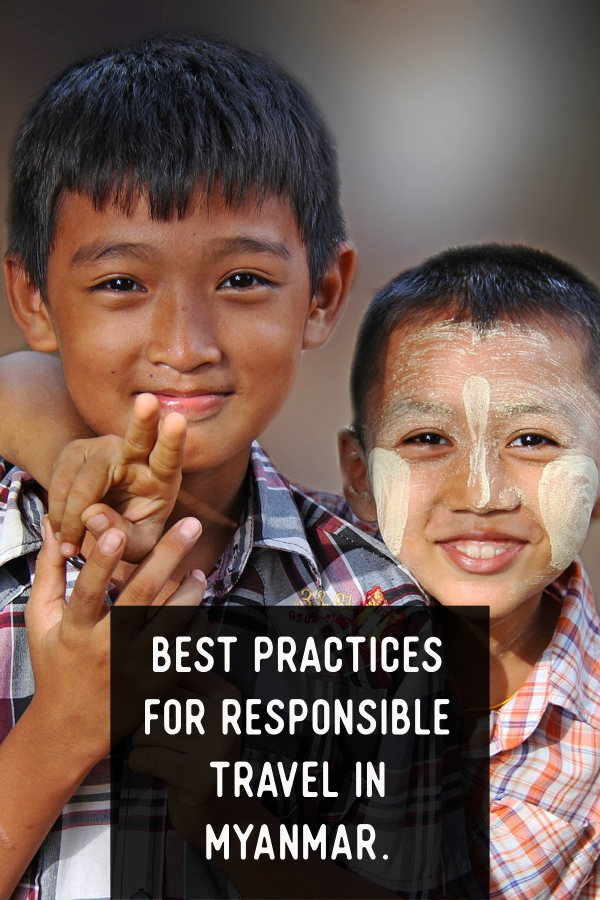
Best Practices for Responsible Travel In Myanmar (1)


Best Places To Visit Around Yangon One Day Yangon Tour

As we began our descent into Yangon, we gazed out the plane’s windows and were amazed at Myanmar even before touching down. Our Yangon sightseeing is fantastic.The first thing that we noticed was the huge number of golden pagodas scattered around the landscape. Some were small, some big, but they all shone so much in the bright sunshine that they were easily visible from up above. This definitely triggered some excitement, we’d finally made it to Yangon to begin a fourteen day trip around a country that was totally new to us. It’s always exciting to land in a new country, but even more so with Myanmar, because it only re-opened its doors to tourism a few years back.

colonial-buildings-in-yangon

Arrival to Yangon 

Upon landing, we were glad to feel the heat outside. Melbourne’s highly changeable spring weather had been rough on us, so some hot weather was very welcome! We cleared customs, grabbed our bags, and thirty minutes later we met our tour guide who was patiently waiting for us in the arrivals hall.

Since we only had a couple of weeks in Myanmar, we decided to use a Burmese agency called Pro Niti Travel (highly recommended), who customised our entire trip for us. It’s something we like to do when we only have a short amount of time in a country, especially when we don’t speak the local language. Pro Niti organized everything, our drivers, our guides, our accommodation, our flights and our entire itinerary. All we needed to do was sit back and enjoy the trip! By the time we exited the airport it was 9.30 in the morning, and even after an overnighter from Australia, we were ready to tackle the sights of Yangon.

Yangon, also called Rangoon is the former capital city of Myanmar’s (Naypyidaw is its current one). It’s the country’s largest city with over five million inhabitants. Yangon has a mix of Burmese, British and Chinese influences and you can see them everywhere you look. Burmese pagodas are scattered all over town, but you’ll also come across Colonial buildings, churches, mosques and even a synagogue. And of course, there are many Chinese markets! With Myanmar opening its doors to tourism, Yangon has received a surge in overseas investors and a subsequent construction boom. The face of the city is definitely going to change, so I’m glad we didn’t wait too long for our first visit.
Being such a large city, Yangon has many great attractions to visit. Of course, with just one day where we didn’t have enough time to see them all. But we were glad to have a knowledgeable guide to take us to the best attractions. Our Yangon tour was perfect and really memorable.

Chaukhtatgyi Pagoda

chauk-htet-kyi-pagoda

Reclining Buddha


Our first stop was the Chaukhtatgyi Pagoda. This pagoda is an open-sided steel and corrugated iron shed housing a 66 meter long and 17 meters high reclining Buddha. This Buddha is one of the most admired in Myanmar and it’s certainly impressive. Dressed in a golden robe, its crown is encrusted with diamonds and precious stones. Its right arm supports the back of its head and the Buddha has clear, gazing eyes, a white face, bright red lips and painted nails. The soles of its feet contain one hundred and eight segments painted red and gold, containing images that portray the one hundred and eight lakshanas (the auspicious characteristics of the Buddha).
Many worshipers were paying their respects at the pagoda by praying, burning incense sticks and offering flowers or donations.
Because of its size, getting a photo of the entire Buddha was a tough job. Thankfully there is a platform besides its feet that provides a nice lengthwise view.

Kandawgi Lake

Kandawgyi Lake and Karaweik Hall

Kandawgyi Lake and Kararwiek Hall


We then drove to Kandawgi Lake, which was a great place to take photos. It offers some amazing views of the Shwedagon Pagoda, which you can clearly see shining across the lake. The Karaweik floating palace is also pretty impressive, with its golden decor reflecting onto the surface of the water.
Our guide pointed out the Kandawgyi Palace, the iconic Yangon hotel that had burnt down only a couple of days before our arrival. We were actually due to stay there, so we were very lucky not to have been there at the time! Sadly there was not much left of it after the fire.

Bogyoke Aung San Market

bogyoke-aung-san-market

Bogyoke Aung San Market

After a nice traditional Myanmar style lunch, we checked into our hotel, had a well-deserved shower and rejoined our guide to head to our next stop, the Bogyoke Aung San Market. This market is the largest tourist craft market in Yangon. It has over two thousand stalls selling anything from traditional Burmese handicrafts, clothing, jewelry, gold, silver and jade items.

The market is a shopping paradise for tourists and it’s pretty easy to get lost inside it! It’s a great place to buy souvenirs if you are planning on taking any home. Bare in mind though that the market isn’t air-conditioned, and the heat was almost unbearable, even for me!

Mahabandoola Park and the Sule Pagoda

yangon city hall

Yangon City Hall

The Mahabandoola Park is located right next to the Sule Pagoda, which is the centre of the city. It’s a great place to watch the locals, who gather here in the evenings after work.
It’s also a nice place to stroll around because it’s surrounded by heritage buildings, such as the City Hall, the High Court, and the historic Rowe & Co department store which is now a bank. Right in the middle of everything is the Independence Monument, a 165 feet high white obelisk.
We didn’t go inside the Sule Pagoda, although it is possible to do so, the outside was impressive. With its octagonal base, this 46-meter pagoda is fully gilded with gold and glows brilliantly in the sunshine. It was used as a rallying point, in both the 1988 uprisings and the 2007 Saffron Revolution.

Shwedagon Pagoda


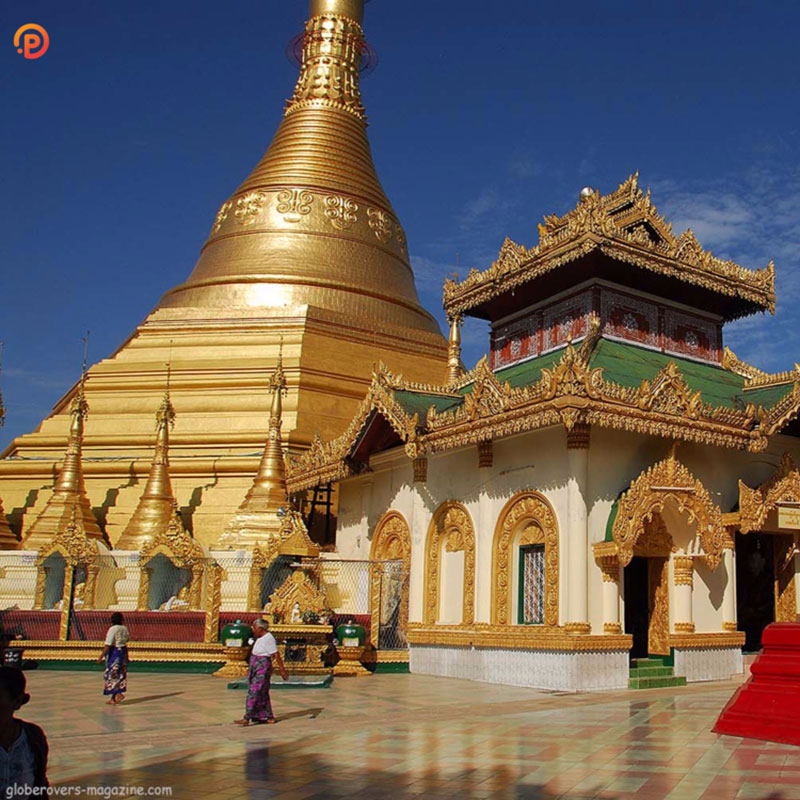
Our last stop, but also the most impressive one, was the Shwedagon Pagoda. We kept that one for sunset because it looks amazing then. The fading sunlight sparkles off its golden stupor, giving it a heavenly glow. It’s also best to avoid visiting during the heat of the day because the tiled floor gets so hot that you might burn your feet! As with every other Buddhist temple in Myanmar, you must remove your shoes and socks before entering.

The Shwedagon Pagoda is the most beautiful Buddhist temple we’ve seen so far and we’ve been to a few Buddhist countries. No temples have been quite as opulent and breathtaking as the Shwedagon Pagoda. Not only is it the most beautiful, but it’s also the most sacred Buddhist spot in Myanmar. It is said to house the relics of the four previous Buddhas of the present Kalpa.

This 99-meter high pagoda is over 2500 years old and it totally dominates the city’s skyline. Covered with hundreds of gold plates, the top of the stupa is encrusted with 4531 diamonds. The largest diamond sits at the top and is a mere 76 carats! The amount of money and effort poured into building this pagoda is incredible.

It’s not just about the main stupa, the Pagoda contains hundreds of colorful temples, stupas, and statues. It could easily take you a few hours to walk around. Of course, visiting at sunset means you that you’ll finish exploring at night, but after dusk, the golden pagoda is lit up and shines beautifully against the night sky.

Of course, sunset attracts the crowds, so don’t expect to be the only ones there! But crowded or not, this place is truly amazing, and it’s the highlight of Yangon. So if you only have time to see one sight in Yangon, make sure this is it!

Sadly that was all the time we had to explore Yangon before taking the first flight out the next morning, moving on to Bagan. I’d been expecting Yangon to be just another big, bustling city that I would hate, but it certainly proved me wrong.


This blog was provided by Pro Niti Travel’s guest, Free Two Roam travel blog. Follow and connect on Facebook and Instagram. Twitter, Pinterest and Youtube.

Planning or thinking to travel Myanmar, our travel experts are ready to assist, get in touch now.


Places you should visit in Yangon

The unforgettable train-ride experience to charming small town: Madaya, Mandalay

Myanmar is famous for its richness of culture, beautiful landscape and local people: their heart-warmed welcoming, authentic smile and exciting way of life. When you think to visit Myanmar, Mandalay should be in your top lists since this is the place where you can explore about Myanmar’s culture, it’s ancient history and adventure activities such as biking, soft-adventure hike to Mt. Mandalay, food tours, etc.


Most of the people took two to three days around Mandalay like one day around Mandalay: one day around the three ancient cities such as Amarapura, Sagaing, and Innwa, one more day visiting Mingun by boat.

What about taking train-ride around Mandalay? Sound awesome, right? I would like to introduce you this time, Madaya, the charming town which is located just 30 miles away from Mandalay.


Thu Ye Zay


You can reach to Madaya by car and train basically, I would recommend you to take the train since that would be one of the most remarkable experiences and memories for you during your trip to Myanmar. There is a Thu Ye Zay ( သူရဲေစ်း) station, which is located at 77 street x Aung Mingalar Street. There is two-time departure a day from Thu Ye Zay to Madaya, 0715 AM and 1400 PM.


You better get up early and takes 0715 AM departure train would be great. Here one of the most exciting things comes in. Thu Ye Zay, the colorful local market is located on the train tracks. Awesome, right? Let me share you my experience. Early morning around 0530 AM, I get up and make myself ready to go to Thu Ye Zay station. The weather is so cold and perfect. Fresh-air in the early morning makes me awakes and so fresh. And, of course, I am ready to explore this fantastic market on the train track. This market is a fantastic market with full of local products, vegetables, flowers, meats and fish, the list goes on. One should reach there around 0645 AM to explore the market before taking the train to Madaya.


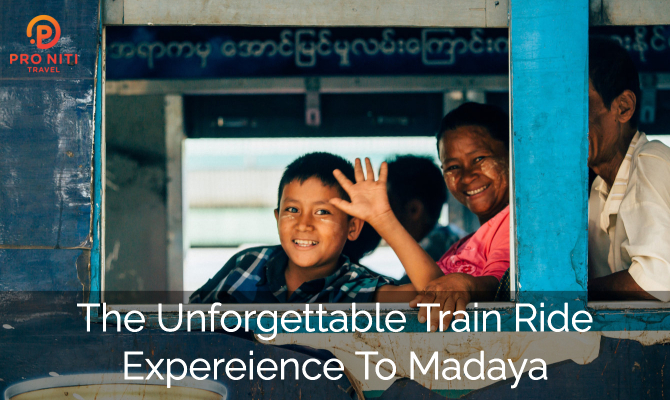
Local men on the train

Student on the train to Madaya


It will cost only 150 MMKs for train tickets and easy to buy. Sometimes, you can get the seat, while sometime you may have to stand at some spots. When you arrive on the train and take a position, make your camera ready to take photos of the interesting daily routine of local people and most importantly, you should consider window seat to take the photo of the market on the train track when it starts leaving to Madaya.

On the way to Madaya


It will take only one and half hour to Madaya. The scenic view along the way to Madaya from Mandalay is breathtaking. Get the help of your guide to chit-chat with local people on the train would be one of the great experience. I heard that sometimes, there is a card-playing on the train and you can participate which is fun to do with locals. There are some stops on the way and taking pictures and exploring how things work here is exceptional. When you arrive at Madaya, you can explore this small charming city by trishaw or by car (if you arranged). You can visit the local market, local-cottages in this small town and try tea at the tea shop, too.

At the ticket counter of Madaya station

You can come back by bus. But, be careful with that since this is a basic one and a bit small. It also stops again and again on the way. However, it is an excellent experience to be on this little local bus with local, too.

Myanmar is an amazing destination to explore. I would recommend taking this journey for unforgettable train-ride experience over the market to the small charming town, Madaya.

Are you planning to travel Myanmar? Our travel experts, travel advisors are ready to assist you. Get in touch with us now.

Unforgettable train ride experience in Myanmar

My Best Travel Experience In Southern Part Of Myanmar
Pro Niti Travel interviews our guests and other travelers who have been to Myanmar to let them share their experiences, advice for Myanmar travel, and to inspire all of us about traveling in Myanmar.This month we interview our guest Yanik from Switzerland. Let’s see what he think about his trip and Myanmar.


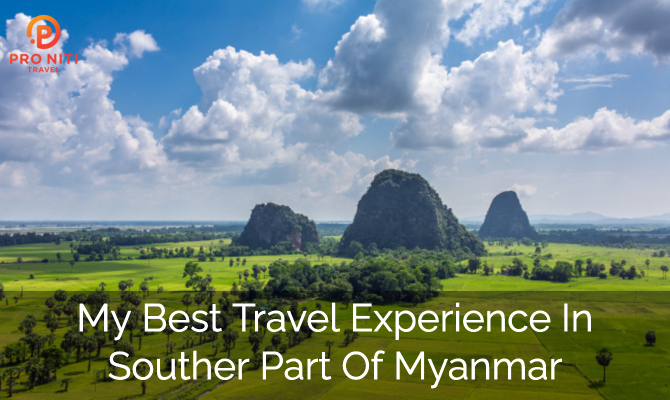
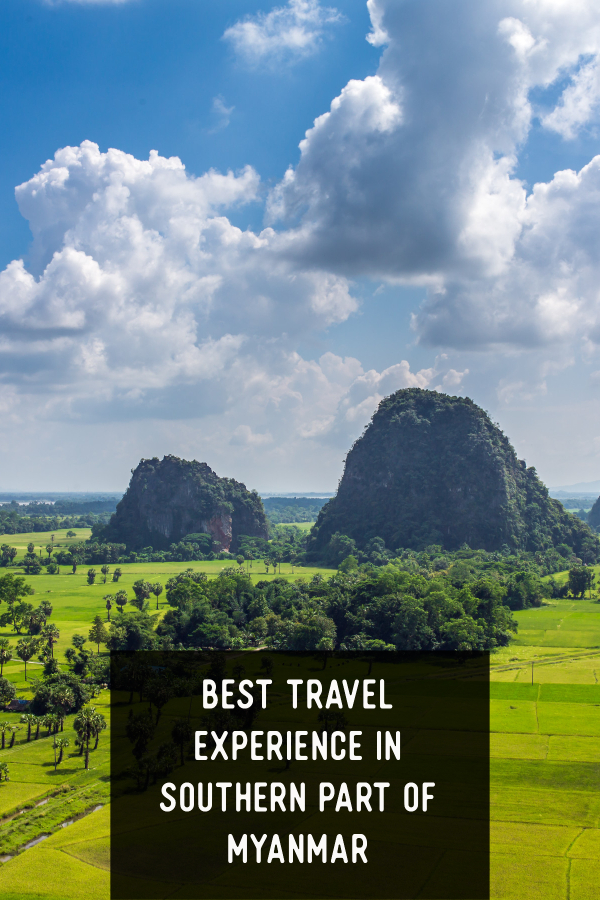
Southern Part of Myanmar


Q1. PRO NITI: Please tell us about the places you visited in Myanmar that you enjoyed the most?

GUEST: I loved the south! Mawlamyaing, Hpa An, and Kyaiktiyo left a deep impression! But of course, Bagan is a must too!

Q1. PRO NITI: And how about the people? Please tell us any interesting experiences you had with the people in Myanmar?

GUEST: The people are very friendly and especially in the south very curious about western people. I was very often asked for pictures of them 🙂


A sweet smile of local girl


Q1. PRO NITI: How about the food you had in Myanmar? Please tell us if you enjoyed the food and which food did you like the most.

GUEST: Shan noodles are a must! But I especially loved the big variety of fresh fruits everywhere too!

Q1. PRO NITI: Was there any specific memorable experience you had which you will not easily forget? If so, please tell us about it.

GUEST: There are so many things to mention. One of the most rememberable experience was the train ride from Yangon to Mawlamyaing! But also the sunrise over Bagan in a balloon is an unforgettable experience!


Ballooning in Bagan


Q1. PRO NITI: Are there any experiences you had that you can recommend to other travelers not to miss? If so, please tell us about it.

GUEST: Do at least one train ride!

Q1. PRO NITI: Did your travel experiences around Myanmar exceed your expectations, or did you expect more? Please tell us how your expectations were met.

GUEST: All in all this trip exceeded my expectations by far!

Q1. PRO NITI: Have you taken any train journeys in Myanmar? If so, please tell us what you think of the experience.

GUEST: See above! 🙂 Yes, great experience! It is like the market is coming to you as they sell everything on the train (food of course but also clothes, beauty products, medicine and many other things)

Train Station


Q1. PRO NITI: Have you made any new friends in Myanmar? Please tell us how did it happen and why this person or people became special to you.

GUEST: I met many very beautiful people on my trip but was just not long enough in Myanmar to really make friends.

Q1. PRO NITI: Did you get any culture shock while traveling in Myanmar? If so, where did it happen and why was it such a culture shock to you?

GUEST: Well, of course, a city like Yangon is everything a western town is not. But no, I did not have any kind of shock.

Smile more


Q1. PRO NITI: Are there any places you have not yet visited in Myanmar and would love to come back and visit next time?

GUEST: Yes, I would love to see Mandalay and its surroundings and more of the south.

Q1. PRO NITI: Is there any advice you can give to travelers who are considering to visit Myanmar in the near future?

GUEST: Do not rush from one place to the other and give yourself some time to just stroll through towns and villages. My highlights were no big monuments, pagodas, temples or churches (although there are some very beautiful pagodas, etc.) but the street life, the markets, and the people.


A young kid selling vegetables

Are you thinking or planning to travel to Myanmar, our travel experts are ready to assist you, Enquiries Now!

Best Travel Experience in Southern Part of Myanmar

Top Ten Popular Tourists Destinations in Myanmar [Infographic]

Myanmar is getting popular among traveler as new authentic and remote destinations for adventure seekers. We love to share top ten popular tourists destinations in Myanmar with you. Each of destinations has their own uniqueness and amazing activities to do. For more detail information about top ten popular destinations of Myanmar and other incredibly nice destination, explore our recommended destinations in Myanmar, too.


Are you planning or thinking to travel Myanmar, get in touch with our travel expert now.

Meet Traveler to Myanmar: Charlie & Lauren

Pro Niti Travel interviews our guests and other travellers who have been to Myanmar to let them share their experiences, advice for Myanmar travel, and to inspire all of us about travelling in Myanmar.

This month we interview Charlie & Lauren from Wanderers & Warriors Travel blog who recently travelled to Myanmar.

Pro Niti Travel: How many countries have you been to?

Traveler: Myanmar is our 3rd country as a twosome but separately we have covered over 30.


PNT: What inspired you to visit Myanmar? How long did you take to plan your trip?

Traveler: We always wanted to tick off Myanmar but it wasn’t until Sri Lanka that we realized it made sense as a perfect starting point for our Southeast Asia trip. It didn’t take us long at all to plan, we researched a little online but usually just wing it when we arrive in a place.


PNT: Including this trip, how many times have you visited Myanmar?

Traveler:  This is our first time in Myanmar and it’s lived up to all expectations!

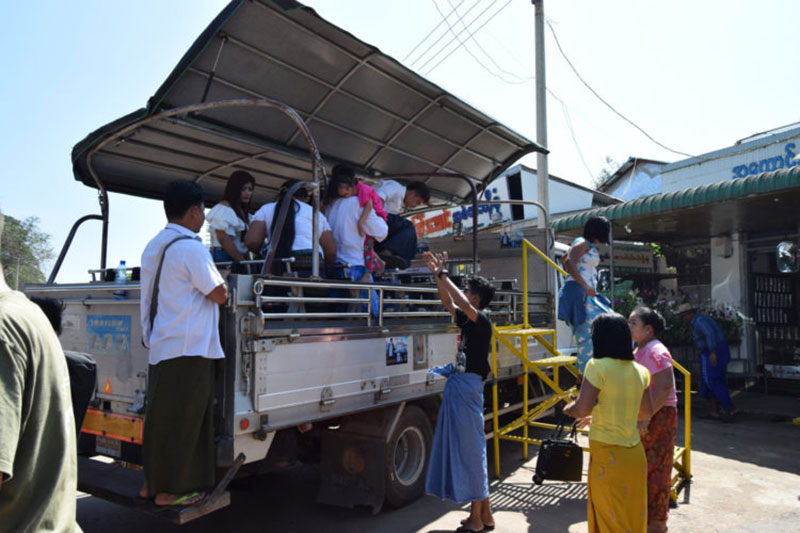
truck station at golden rock

Truck Station at Golden Rock


PNT: Please tell us about the places you visited in Myanmar that you enjoyed the most?

Traveler: Of course Bagan and Inle Lake were awesome but we also visited the Mon & Kayin states, which was a real cultural experience and more, undiscovered than the usual tourist route.


PNT: And how about the people? Please tell us any interesting experiences you had with the people of Myanmar?

Traveler:  One thing we can honestly say…Burmese people are the happiest and most welcoming we’ve met on our travels. From playing football with the kids on the street to the young girls giggling at us and being too shy to say hello. Everybody we’ve met in Myanmar has greeted us with a smile!


PNT: How about the food you had in Myanmar? Please tell us if you enjoyed the food and which food did you like the most.

Traveler: We love Asian food anyway so it was always going to be a winner but Myanmar has to be the king of coriander. WOW…KING OF CORIANDER HEY! We couldn’t get enough of the noodle soups and there was actually one dish that we never did find out the name of, it was served on the streets of Yangon and all we have is this photo as a reminder…

street food

Street Food

lunch as locals

Having lunch as locals


PNT: Was there any specific memorable experience you had which you will not easily forget? If so, please tell us about it.

Traveler: Our day on Inle Lake was memorable…not just for the lake itself, but for all the different stops we made along the way. We saw silver being made from a stone, clothing being made from lotus plants and cigarette filters from the husk of corn.


PNT: Are there any experiences you had that you can recommend to other travelers not to miss? If so, please tell us about it.

Traveler: Definitely the big 4. It’s no surprise Bagan, Yangon, Inle Lake and Mandalay has become so popular amongst travelers. If you get the chance to head south a little to Kyaiktiyo the Golden Rock is pretty impressive and hiking in Hsipaw is beautiful!


PNT: Did your travel experiences in Myanmar exceed your expectations, or did you expect more? Please tell us how your expectations were met.

Traveler: Myanmar definitely exceeded all expectations. We had no real idea how friendly and helpful strangers would be towards us. People we’d met beforehand all said how happy Burmese people were and they didn’t disappoint!


PNT: Have you taken any train journeys in Myanmar? If so, please tell us what you think of the experience.

Traveler: We actually didn’t. We just came from India and Sri Lanka so had overloaded on train journeys. For Myanmar, we stuck to the fast route of VIP buses.

sweet kids from myanmar

With sweet kids from Myanmar


PNT: Have you made any new friends in Myanmar? Please tell us how did it happen and why this person or people became special to you.

Traveler: We made many friends that we met through accommodations and tours that we’ll definitely keep in touch with!


PNT: Did you get any culture shock while traveling in Myanmar? If so, where did it happen and why was it such a culture shock to you?

Traveler: We think we saw everything we possibly could in India so Myanmar was a breeze although it never failed to amaze us how people survive out in the middle of nowhere amongst the paddy fields.


PNT: Are there any places you have not yet visited in Myanmar and would love to come back and visit next time?

Traveler: We’re due to leave in a few days and are not sure if we’ll make it down to Ngapali Beach or Myeik but would love to come back and visit.


PNT: Is there any advice you can give to travelers who are considering to visit Myanmar in the near future?

Traveler: Do it! A lot of people tend to skip Myanmar on their Southeast Asia tours but for us it’s must. Knowing what we know now after visiting we rate it among the top countries in Asia.


Read More Guide to visit Golden Rock

Planning to travel Myanmar and have questions and need the assistant, our Myanmar travel experts are ready to help you. Get in touch with us now.

Guide to visit Golden Rock (Kyaik Hti Yoe)

The gravity defying Golden Rock has always been an important religious shrine amongst the Burmese Buddhist community, but with more and more tourists visiting the country each year the oddly balanced monument has recently become a tourist attraction for foreigners…

We took a trip to see it with our own eyes and have put together everything you need to know:

Background

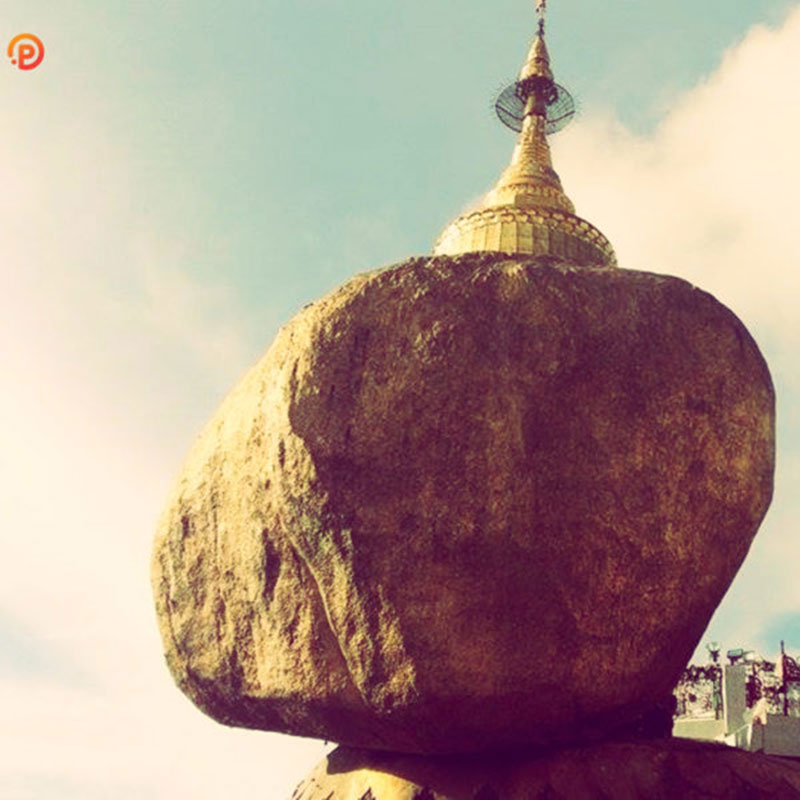
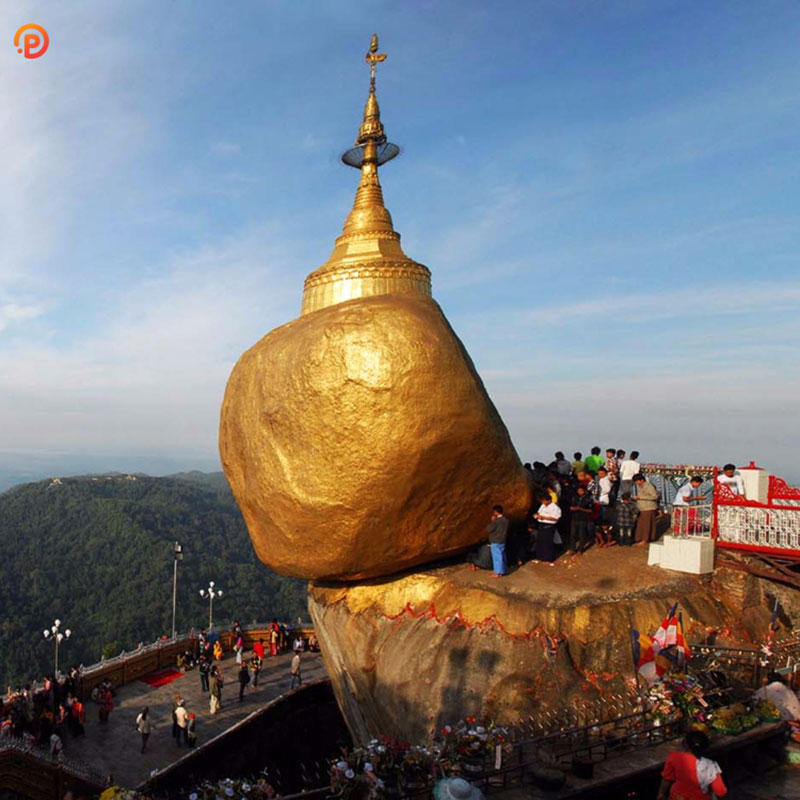
Kyaiktiyo Pagoda (also known as Golden Rock) is a well-known Buddhist pilgrimage site in Mon State, Myanmar. It is a small pagoda(7.3 metres (24 ft)) built on the top of a granite boulder covered with gold leaves pasted on by its male devotees.

According to legend, the Golden Rock itself is precariously perched on a strand of the Buddha’s hair. The balancing rock seems to defy gravity, as it perpetually appears to be on the verge of rolling down the hill.

golden-rock-myanmar

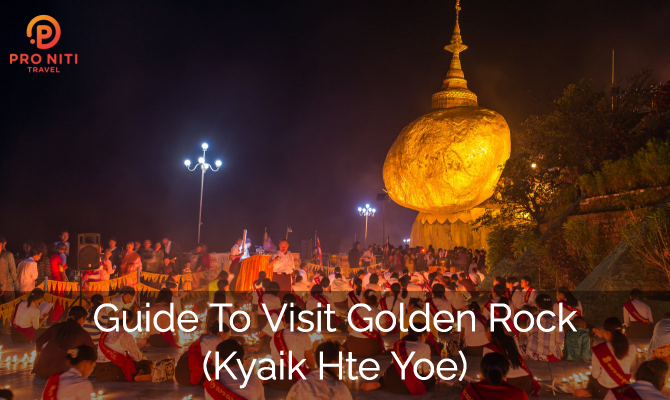
Golden Rock

How to get there and costs

Upon arrival at Kyaiktiyo bus depot, you’ll have to get a tuk-tuk to your hotel. If you’re staying anywhere near Base Camp (which we recommend) then don’t pay more than 8,000 Kyat.

The next morning you can walk from your hotel to the truck stop in the middle of town. Trucks shuttle up and down to the rock from 6.00am to 5.30pm everyday. They fit around 50 people in per journey and it will cost you 2000 Kyat per person. The journey up takes roughly half an hour

Drop off is at the entrance to the golden rock town where you still have a good 20-minute walk to the entrance of the rock itself.

truck-station at golden rock

Truck station at basecamp, photo by Wanderers & Warriors

Tips and tricks

Be prepared for a bumpy ride to and from the rock. If you can grab a seat at the end of a row – you’ll feel the breeze from the fast-paced drive and hopefully end up a little less squished.

Head out early to avoid the heat. We left at 8 am and were on the way down before the hottest point of the day. We wouldn’t want to be heading up anytime after late morning!

The Golden Rock is literally the only thing to do in Kyaiktiyo, so you won’t need more than a nights accommodation.

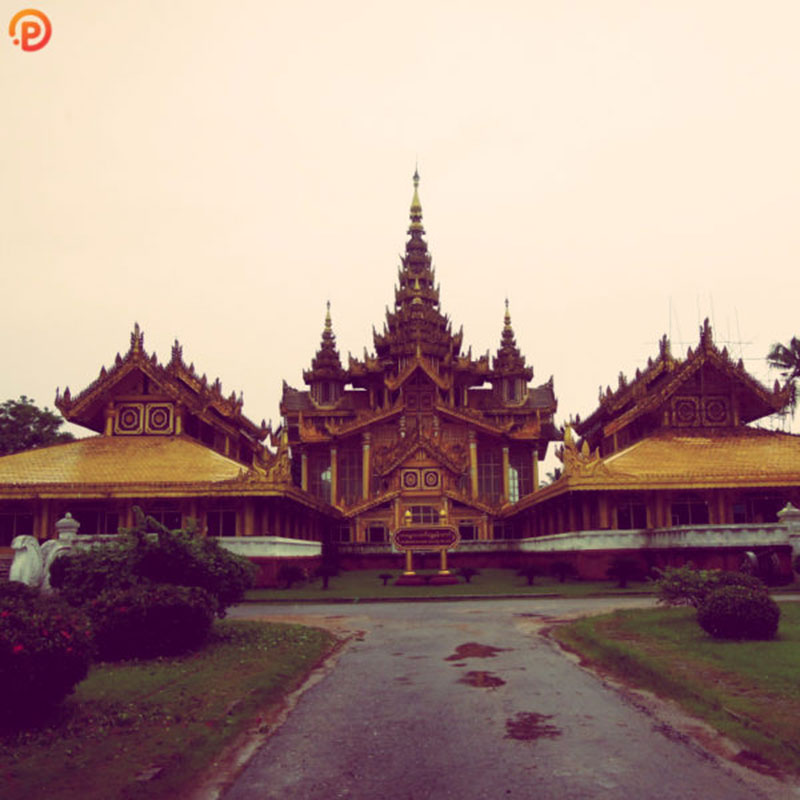
kanbawzathadi-palace-bago-myanmar

Kanbawza Thardi Palace in Bago, on the way to Golden Rock

Where to stay

Golden Sunrise Hotel – We spent a night here and it was perfect. Just outside the main Base Camp town, it was beautifully decorated amongst palm trees and with A/C, a large ensuite and hot water you can’t go wrong.

If you like to enjoy both sunset and sunrise, other options are to stay at the top of mountains, there are famous hotels such as Golden Rock hotel, Mountain Top hotel, Kyaik Hto Hotel. Yoe Yoe Lay hotel is a bit more basic and should check based on your budget.


This post was written by Charlie and Lauren. Check out their Facebook and Instagram, too for more inspiration to travel Myanmar and around the world.


READ MORE: Golden Rock-Bago-Yangon Trip 

Planning to travel to Myanmar? Our Myanmar personal travel planners are ready to assist you, get in touch with us now.

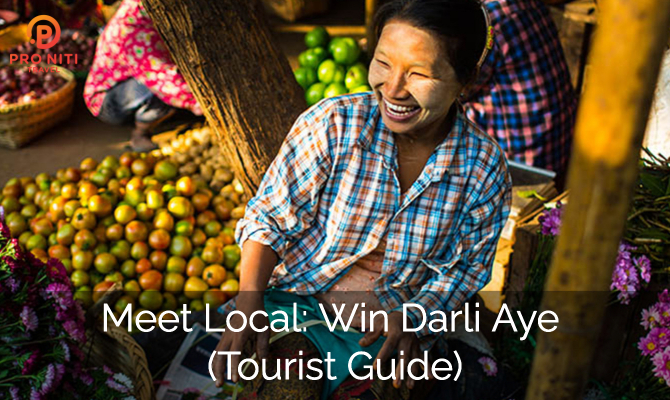
Meet Local: Win Darli Aye (Tourist Guide)

Meet Myanmar local is the place where you can learn more about the country from the point of view of Myanmar local. We interview local people what they think about their country, where do they recommend to visit in Myanmar and what kind of Myanmar food you should try and why you should visit Myanmar.


selfie with the happy guest at the centre of yangon

Selfie with the happy guest and guide,at the centre of Yangon

Q: What do you think are the best places in Myanmar to travel to and why?

One of the best places in Myanmar is Yangon, situated in the southern part of Myanmar. From here we can go to Mawlamyine and Hpa-An to see the Ramseur site area and to enjoy the nature. Other great places are the cultural cities of Mandalay and Bagan, where there is beautiful architecture and mural paintings; Shan State is remarkable as here you will find Inle Lake, also known by some as the “Venice of the East”. Kayah state is great for hiking and to experience the lifestyle of the locals.

Q: Think of all activities that travelers to Myanmar can do. Which activities do you think are the most exciting and adventurous?

Myanmar offers so many incredible activities. Among my favorites are taking the circular train and trishaws in Yangon, sitting in a large truck taking visitors up the mountain to Golden Rock Pagoda, walking inside the many caves, hiking along the mountain ranges and paddy fields. So many exciting and adventurous activities.

Q: Let’s talk about real Myanmar food. Which food is your favorite and why?

Mohingar (rice noodle with fish gravy) is one of Myanmar’s most traditional soups. Most of the people love this and this is our signature food of Myanmar. 

proniti guest experience

With our guest

Q: Tell us about your favorite destination in Myanmar. What’s the name of the place, where is it located, and why is it your favorite place?

Inlay Lake is my favorite which is situated in the southern part of Shan state. It is really unique because of the floating gardens and we can enjoy hiking around the area too.

Q: Why do you think travelers like to visit Myanmar? What are they coming to see and do in Myanmar?

In my opinion, Myanmar people are so hospitable to their visitors. Visitors usually talk about our country as a very peaceful place with honest people.

Q: What is it about life in Myanmar that you like the most?

We have our tradition of: ”Respect to the elderly, admiration to those of similar as us, and empathy towards the youth. “

proniti guest experience

Tea Break with the guest

Planning to travel Myanmar and have questions? Our travel experts are ready to assist you, get in touch with us now.

Myanmar's Mon State and Kayin State

This article is used with permission by Globerovers Magazine, the magazine for intrepid travellers!
www.globerovers-magazine.com
twitter.com/GlobeRovers
www.facebook.com/GloberoversMag


The Mon State in southeastern Myanmar (Burma) offers great off-the-beaten-track adventures.  Head down to Mawlamyine, Set Se Beach, Hpa-An (in neighbouring Kayin State), Kyaikhto, Bago, and return to Myanmar’s largest city, Yangon. This region is off the “standard tourist trail” so in some areas you may travel for many days without seeing another foreign traveller.  The tourist infrastructure is rather insignificant, but there are hotels and guesthouses mainly focused on local tourists and business people. Public transportation is an experience in itself! Take the train only if you have a strong stomach as even some locals puke when the train shakes out of control at just 20 km per hour.

The first time I visited Myanmar was in July 2006 and at that time I promised myself that I will be back very soon. Well, it took me almost seven years to return. This time I promised that I will be back in less than a year! Myanmar has grabbed the title of “Land of Smiles (LOS)” from Thailand as this must be the friendliest country I have ever visited.

southern part of myanmar

Southern Part of Myanmar

While I found during my 2013 trip more tourists than back in 2006, tourists are still quite scarce, in particular around the off-the-beaten places I visited in Mon State.

My December 2012 / January 2013 trip started in the capital Yangon, from where I took a crazy 13-hour train ride to Mawlamyine towards the southeast from where I explored the areas as far south as Set Se Beach. From Mawlamyine I travelled by long-boat up to Hpa-An where I stayed a few days and then headed northwest to the Golden Rock near Kyaikhto and after a steep mountain climb, I went east to Bago and then back to Yangon.

I chose this route because back in 2006 I did all the main scenic areas such as Inle Lake, Mandalay (and the areas around town, as well as much further north), and Bagan. Now in 2012/13 I decided to venture well off the beaten tracks to avoid any tourists during the New Year holidays. Well, I sure did come across only a few Western tourists who thought like me!

Yangon has certainly changed over the past seven years. While it is still a third world city, I noticed some new upper scale shops, restaurants and hotels. This makes me think back to my very first visit to Saigon, Vietnam 16 years ago. At that time Saigon looked like it has not changed over the past 50 years. There were thousands of bicycles, Lambretta scooters and rickshaws. Now, most of these are all gone.

Yangon is unquestionably heading in the same direction of development as Saigon and soon famous brands will replace the local Burmese shops. Fortunately, within the Yangon city limits, it is illegal to drive motorbikes as they have been banned by the government a few years ago. This ban truly is a blessing (at least to us visitors walking and breathing in the streets). So with these laws in place, Yangon is quite a pleasant city compared with other cities around the world at a similar level of development.

mawlamyine pagoda

Mawlamyine Pagoda

Walking around the streets of Yangon is such a pleasant experience. People are friendly and curious, lots of interesting shops and architecture. Take the famous circular train up north to Danyingon station for the wholesale veggies and fruit market. Another culture shock awaits here!

In Yangon, go for lunch (not breakfast or dinner) to the Aung Thukha traditional Myanmar restaurant. It is a very local restaurant with the occasional foreigner who comes to enjoy Burmese food like the locals do.

MAWLAMYINE

From Yangon’s beautiful (exterior building) main train station a nine to 14 hours shaky, very shaky, train ride terminates in the interesting town of Mawlamyine.

Mawlamyine is famous for the Pa Auk Taw Ya Meditation Monastery. Go in the mid-morning to help out with preparing and serving lunch to the approximately 700 monks. Most monks don’t mind being photographed though you should respect them as they are not on display for your happy snappy flash photography. However, be careful not to take any photos of the old German monk. He will yell at you, though he may be gone by the time you arrive.  Around town and just outside town are many temples, sitting and lying Buddha statues, pagodas, stupas, and more.

Check out the Kyaik-Than-lan Pagoda, U Zina Pagoda, Mahamuni Pagoda, and the Gaungsay Kyun. On the hill just above town are some amazing old monasteries with friendly monks.

Hpa-an

Hpa-an

South of Mawlamyine is the famous and very large Reclining Buddha of Win Sein Taw Ya at Yadana Taung.  Also check out the Thanbyuzayat War Cemetery and the Death Railway in Thanbyuzayat.

South of Mawlamyine is the famous and very large Reclining Buddha of Win Sein Taw Ya at Yadana Taung.  Also check out the Thanbyuzayat War Cemetery and the Death Railway in Thanbyuzayat.

HPA-AN

From Mawlamyine take a longboat shared with five or six other travellers. After checking in at the popular Soe Brothers Guesthouse, head over to the San Ma Tu Restaurant for some of the greatest Burmese food in Myanmar.

golden rock

Golden Rock, Kyitehtiyoe

Na village is great for sunrise or sunset photos. Ditto for Kan Thar Yar Lake just outside town! Do make sure to climb Mount Zwegabin from the east side (start no later than 7 AM) and then down the west side. You will be sorry if you don’t follow my advice

KYAIKHTO OR THE GOLDEN ROCK

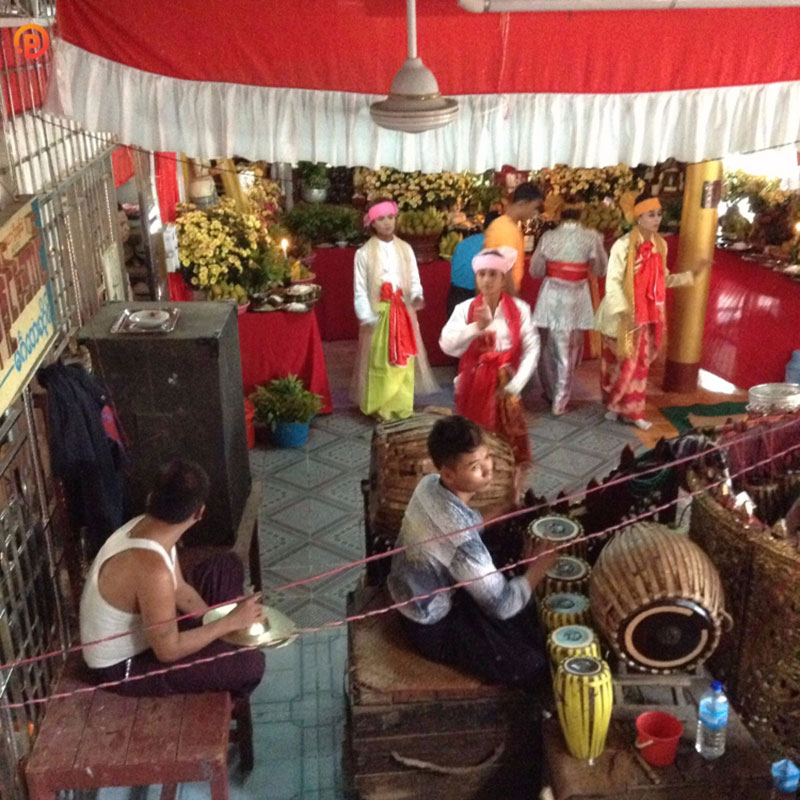
traditional-dance-nat-pwal

Myanmar traditional dance (Nat Pwal)

From Hpa-large heavy-duty trucks take the pilgrims up to near the top of the mountain. Do not sit in the back of the truck. Ask the driver to sit in the front, even if he charges a bit more. Some of these drivers have no respect for the people in the back and sitting in the back may be your worst experience ever, though some travellers have reported it as “the experience of a lifetime!”  The ride takes 45 minutes to get to near the summit from where you walk another 30 minutes. Do not walk all the way from the village to the top. Rather walk down the small path all the way back to the village. This is about a 5-hour walk as you likely will stop many times along the route to have a laugh with the locals. This is a great experience!

BAGO

From Kyaikhto take a bus to the town of Bago which is packed with interesting sites, including more pagodas, temples, stupas and monasteries. However, even though I thought I had seen enough of these, I found that Bago offered some very interesting experiences. In addition to all the sites listed in your guidebook, check out the normally non-listed ShweGule Maha Paduma Teaching Monastery.

After two or three days in Bago, hop back on that shaky train for another interesting ride back to Yangon. Make sure to go back to the Aung Thukha traditional Myanmar restaurant!

TRAVELER TIPS

Travel all over Myanmar is improving slightly as more tourists are arriving. At this stage, it is best to rent a car and driver to reach some areas. Between main cities take the shaky train for a surreal experience. Flying remains expensive as foreigners are charged a steep premium fare though it is the best option for long-distance travel.

Myanmar is quite safe. Remain street-smart and you should be fine. Crime against foreigners has been (and hopefully still is) severely punished.

Currently Myanmar has a major shortage of tourist accommodation in some areas. If you travel to popular destinations such as Yangon, Mandalay, Inle Lake and Bagan, you need to book well in advance during high and peak season. Most, but not all, people love to be photographed, so go ahead and make their day.

With our tailor-made journey you can enjoy your own personal preferences, we will do our very best to design an unforgettable tour to fit your specific requirements.

Are you planning to travel Myanmar and have questions? Our travel experts are ready to assist you, get in touch with us now.

Journey to Mrauk U - Remote Ancient Buddhist City

The alarm rang. At 5:30 in the morning, my mind was still in a murky haze having arrived in Mrauk U just a few hours before. The entirety of the previous day was spent traveling by plane, boat and jeep and yet there I was, up and on the go once more.Burma’s Rakhine state, where Mrauk U is located, is closer to Bangladesh than to Yangon. The roads here are so underdeveloped that an 80 km road trip between two points in the state takes almost 5 hours. We decided to take a longer but less bumpy route, and went on a 6-hour journey by boat after we arrived in Sittwe, the administrative center of Rakhine state.

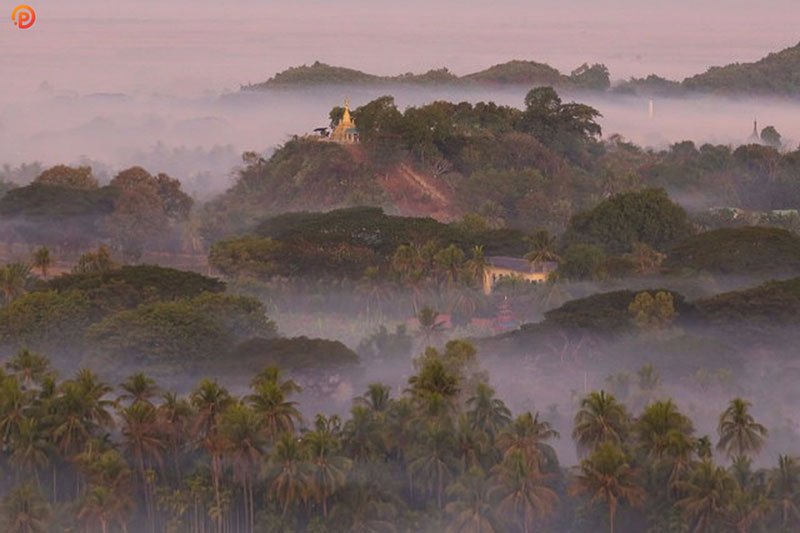
At 5:30 in the morning, I found myself scaling some unknown peak in utter darkness, with the faint luminance of a flashlight guiding the way. A closer peek revealed a golden pagoda at the top – the Shwetaung Paya, from where the sunrise views of Mrauk U are said to be legendary.

sunrise in mrauk u

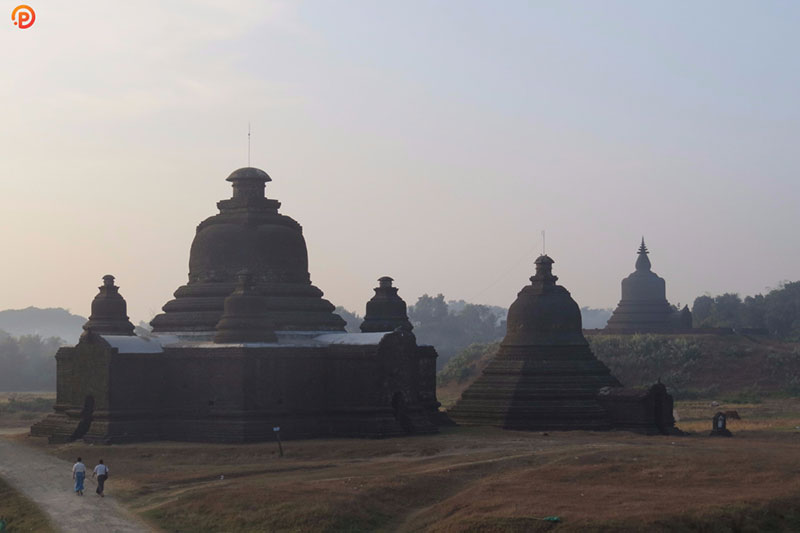
Sunrise in Mrauk U

“This better be worth it,” I muttered to myself. The air was a lot colder than what I remembered from when I had arrived. Surely, it wasn’t what I expected for the tropics.

mrauk u

Mrauk U

By the time we reached the top, the first sign of daybreak had arrived. I could make out a fog forming in the lower altitudes while the sky turned dark blue and later into purple. What happened a few minutes later was perhaps the most magnificent sunrise I have seen in my entire life. The landscape in Mrauk U in Burma’s restive Rakhaing state at dawn is a mishmash of cauliflower fields and village huts surrounded by the morning fog and punctuated by hillocks with several centuries old stupas – it’s a dreamlike scene made even more apparent by the fact that I was still only half-awake on this pre-dawn hike. The sunrise view also served as my orientation to the scattered temples of Mrauk U. There were about 700 in the horizon, and I would only be able to visit a handful.How to Go to Mrauk U

One of the things that has deterred many travelers and kept Mrauk U mainly off-the-radar despite its ability to give Angkor Wat a run for its money is the long hours involved in getting there. You can basically look at a few ways of getting here, assuming you take a domestic flight with any of the more reliable airlines like Air Mandalay, Yangon Airways or Air KBZ from Yangon to Sittwe, the capital of Rakhine state (around an hour fifteen minutes flight).

By Boat

By far, the most popular method of getting to Mrauk U, it is also one of the longest. You can either take a public ferry which runs every day from Sittwe (similar from the other direction in Mrauk U) at 7AM in the morning. This takes about 6 hours. There is also a fast boat on some days, which takes only 4.5 hours. Alternatively, you can charter a private boat which can fit up to 4 or 5 people. The boat (including the crew) will basically wait for you for a few days while you’re in Mrauk U and will similarly take you back.

By Car

Despite popular notions on the contrary, it is possible to take a car from Sittwe to Mrauk U. But it is a very bumpy ride. According to the map, Sittwe to Mrauk U by road is a 145 kilometers in distance but the roads are in poor shape so expect the journey to take around 5 hours each way.

Temples of Mrauk U

mrauk u, rakhine

Mrauk U, Rakhine

Later that morning, we started our exploration of the fascinating but little known temples of Mrauk U. As we had only 2 full days to spend in the area, we decided to hire a jeep (a normal car isn’t able to withstand the poor state of the roads) for about $40 a day. Our driver was an amiable chap who spoke decent English and tried his best to offer some stories to the temples we were visiting.

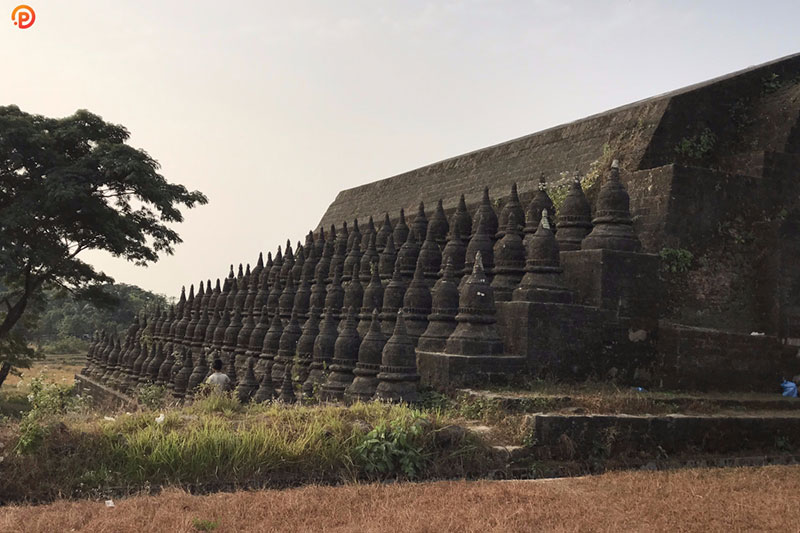
We started our exploration at the temple of 90,000 Buddha images or otherwise known as Kothaung temple. To have started here was pretty symbolic. If there was anything that drove me to insanely pursue such a long trip to get to a remote place like Mrauk U, it was the sight of this square-shaped edifice.

From the outside, its large size and cube-like construction gave off a faint reminder of Borobudur in Central Java. The exteriors are replete with hundreds if not thousands of small stupas that give Kothaung a bit of a pointy/thorny look. The inner chambers, on the other hand, reveal almost life-sized Buddha statues on both sides of the wall. I reckoned the gray monotone construction and exotic looking statues would make the temple a shoo-in if there is ever a need to scout filming locations for the next Indiana Jones movie. The place was just sublime.

the process of making hand-made fan

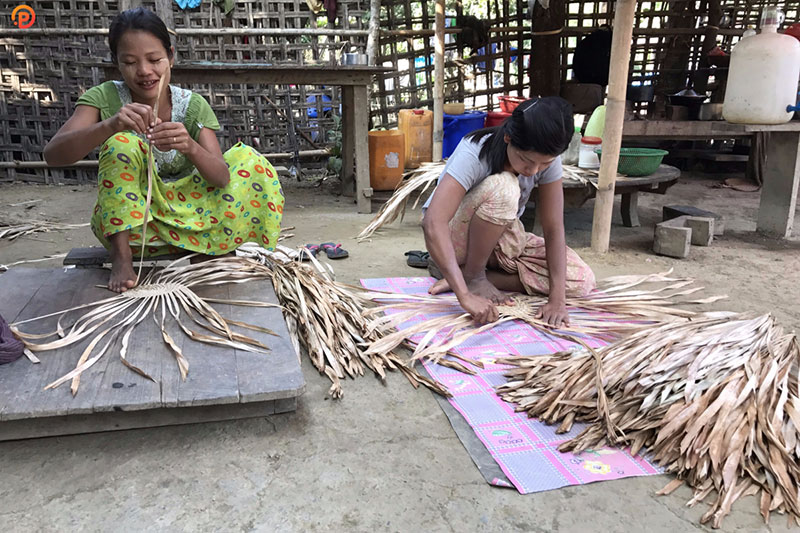
Making hand-made fan

There are a few other interesting temples surrounding Kothaung – which is one of the farther sites in Mrauk U. The semi-destroyed Pizi Paya for instance, offers a nice hilltop view of the pointy outer shel of Kothaung while Paya Ouk and Mokhong Shwegu served as nice excursions on the way back to town.

Sakyamanaung Pagoda & Ratanamanaung Pagoda

panoramic view of mrauk u

Mrauk U sunrise view

Heading towards the direction of town, we passed by a couple of working temples. Sakyamanaung, in particular, seemed quite popular among locals. The temple itself consists of one large, multi-tiered pagoda. At the top, it is bell-shaped but as it extends downwards, it assumes an octagonal shape. It was the only temple in Mrauk U where I saw brightly-colored guardians with sharp teeth by the entrance, similar to what I sometimes encounter in Thailand. Ratanamanaung, which is about half a mile away, had a similar design though it also had a more modern construction next to it with a large Buddha statue and an unassuming souvenir shop.

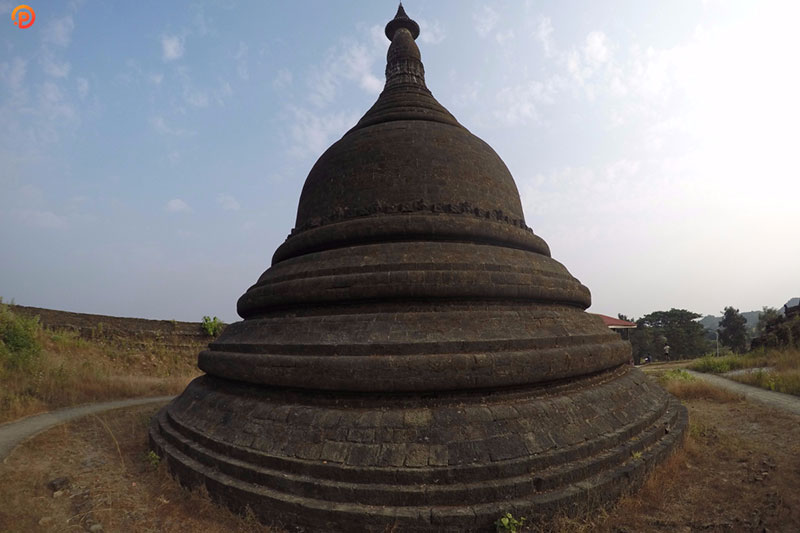
By now, we were well within the town center of Mrauk U. There were a couple of notable temples here as well, perhaps the most visited among the archeological sites in the area. We stopped by the Ratanabon Pagoda, one of the most photographed in Mrauk U. The massive and bulky stupa is quite unlike others in the area, in the sense that it is ringed by 24 smaller stupas. There is a hill next to the temple from where some people go for sunset / sunrise views. The structure seen today had been extensively reconstructed, no thanks to treasure hunters who looted the place many years back. Ratanabon is translated as “treasure,” and precious objects were said to originally lie in the central stupa.

mrauk u, rakhine

Mrauk Temple

A few feet away from Ratanabon Pagoda is the Andaw Pagoda. Like Ratanabon, there are numerous stupas surrounding a central one but the difference here is that all of them are roughly of the same size. There is also an interesting inner chamber at the main stupa with a handful Buddha statues inside. However, it was pitch black when we entered and we couldn’t see a thing.

Shitthaung Pagoda

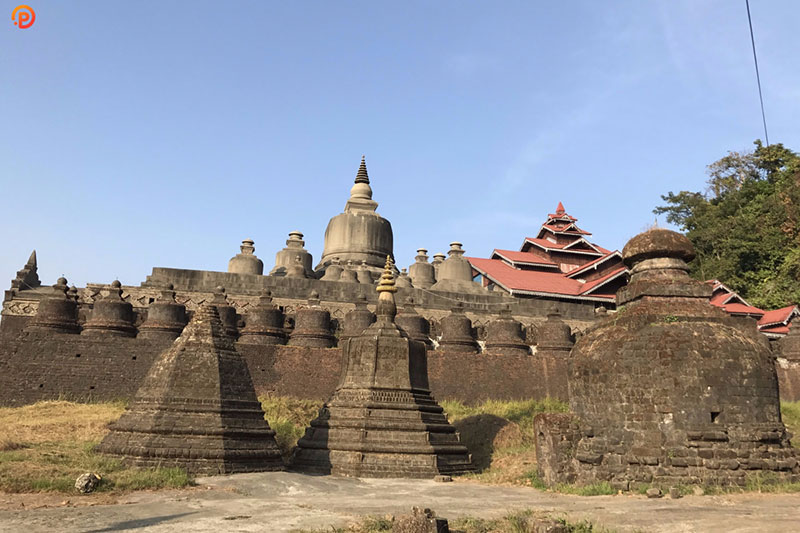
Widely recognized as the “main temple” of Mrauk U, the Shitte-thaung Temple is where most visitors start in Mrauk U. The $5 zone fee is collected here. When I stopped by the temple, I scanned the log book for the visitor profiles. Not a single Filipino it seemed, visited in the 2 or 3 months before I did. When I asked the guy at the registration, I was told that I was the first Filipino tourist he had seen around Mrauk U. The log book didn’t reveal many visitors from Southeast Asia either. Around 1 or 2 other Singaporeans, Malaysians and Indonesians; a couple of Thais and that was about it for the past 2 or 3 months. I wasn’t really sure how I was going to react to the guard’s assertion – the brief thought that I may be the only Filipino insane enough to come briefly popped up, but was quickly quelled by the fact that I was enjoying what I was seeing so far.

mrauk u temple

The inner view of Mrauk U Temple

Of the temples in the entire archeological site, Shitte-thaung probably ranks as my second favorite. The temple itself is divided between a newer and older part. The older part consists of the passageways that run through the temple’s perimeter. Within it, I saw more Buddha statues in stone – though these weren’t as exotic looking as the ones I saw in Kothaung. But apart from that, there were fascinating carvings depicting daily life as well as royal life in the outer passageway. The sheer number of objects in the wall carving as well as the level of detail were very impressive and there’s a walkway from which one can have a great view of a bunker-looking temple down the hill

Laymyatna Pagoda

Another bunker-looking temple lying immediately west of Htukkhanthein is Laymyatna or the 4-faced temple. Compared to the other temples, the restoration here wasn’t extensive but that served to heighten the atmosphere of the place. The temple has arch-shaped windows that give light to the Buddha statues within. It’s a particularly small temple though at the time of my visit there were quite a few locals hanging around outside, using the tall facade as a shade.

Other temples around Mrauk U

mrauk u spectacular sunset view

Spectacular Sunset View of Mrauk U

The temples of Mrauk U are spread across the four corners – I only managed to visit the ones in the east, center, north, some southern ones but completely skipped the western ones. With an extra day, a substantial portion can be covered. But to avoid getting templed out, a one or two day trip around the temples should suffice

Sunset and Sunrise

The sunrise and sunset views around Mrauk U alone are worth the long trip to get here. Aside from the classic Shwethaung Pagoda sunrise on my first day, I also ventured to a place called Discovery View (fee of 500 kyats) just north of Ratanabon Pagoda and the hilltop temples of U-mrawa and Haridaung close to town. Here’s a peek of the views from up there.

Tips for Mrauk U

  1. Avoid coming during the rainy season from mid-May to September. In Mrauk U. When it rains, it pours!
  2. The best time to visit Mrauk U is from November to mid-March when it’s cooler in the mornings and you get to see the morning mist
  3. Put at least a 1 day allowance to your trip to cater for possible ferry or flight cancellations. It’s pretty common over at these parts
  4. Bring lots of insect repellent. You’ll be thankful you did.
  5. Myanmar has one of the highest incidences of malaria in Southeast Asia and Mrauk U is considered to be more frontier than Bagan or Inle Lake. While it may still be okay to visit without having taken malaria pills, it’s best to wear long-sleeve shirts and pants to decrease the chances of getting the disease.
  6. Change your kyats beforehand. Avoid changing in Mrauk U. The exchange rate here is very bad.

This article is used with permission by Bino from I Wander Travel Blog and photos by Pro Niti Travel.

Bino’s I Wander’s social profiles

Facebook, Twitter, Instagram


With our tailor-made journey you can enjoy your own personal preferences so kindly fill out the form below and we will do our very best to design an unforgettable tour to fit your specific requirements.

Planning to travel Myanmar? Our travel experts are ready to assist you, keep in touch with us now.

GlobeRovers Magazine Interviews Pro Niti Travel

GlobeRovers Magazine comment:

I first met Min during my second trip to Myanmar. He gave me such a friendly welcome and offered great advice about where to travel and what to do. He accompanied me on Yangon’s Circular train journey and we hopped off a few times to explore the very authentic fruit and veggie markets. He is a walking encyclopaedia of Myanmar and nobody should plan a trip to Myanmar without first drawing on Min’s experience and knowledge of this incredible country.


This interview was conducted via email in late September 2014.


Globerovers (GR): How would you describe the services you offer to travelers in your area?

Min Than Htut (MTH): We plan travelers’ itineraries and offer a full range of travel services for independent travelers, or only selected services such as car & driver and/or a guide. We also offer group tours which reduce the cost per person.  We offer customised travel services based on guest preferences and budgets.

GR: For how long have you been providing travel services?

globeover-magazine-with-min-than-htut

with Min Than Htut

MTH: I entered the hospitality industry in 2010 as a bell-boy at a Yangon hotel.  I then worked at a travel agency as an operations assistant and later as a freelance tour guide.  In 2013 I established a travel agency, PRO NITI TRAVEL, and while I am involved in all phases of travel planning, I still do some guiding services myself. I just love showingtravelers around Myanmar.

GR: What is the most challenging part of your job?

MTH:  The political (in)stability in Myanmar remains a challenge to the local travel industry. However, it has improved significantly over the past few years. Since Myanmar made these political reforms, we have seen a huge surge in international tourist arrivals. With the sudden influx of tourists, we have a shortage of accommodation which resulted in a rapid increase in hotel rates. Domestic flights are also still quite expensive because international travelers have to pay a premium rate. Also, from time to time we still have spots of unrest in some parts of the country which unfortunately scares off some travelers. International payments also remains a challenge as most travel operators, hotels and retailers still cannot accept international credit cards or online payment systems such as PayPal.

GR: Which area or region in your country do you feel you know best and that you are a specialist?

MTH: I know Myanmar very well and have traveled quite extensively. However, I do tend to specialize in the Chin State (in the northwest), Mon State (in the southeast) and the Kayin State along the Thai border just north of the Mon State. I also specialize in the Big Four destinations (the must-see places) which are Yangon, the temples of Bagan, Mandalay, and the Inle Lake area.

GR: What type of travel experiences do you feel you offer the very best, better than anybody else?

MTH: I really like to take travellers on trekking trips through the Chin State. The nature is awesome here and the local people have such an interesting culture. For those who love nature and beautiful landscapes, trekking around the Kayin Sate is an unforgettable experience.

GR: The key audience of the travelers. 

keng tung

At Keng Tung

MTH: Most of Myanmar is off the beaten track because we still have very few travellers compared with other countries in Southeast Asia. On many trips our travellers don’t come across any other international travellers for several days.  Among the more remote destinations are in Chin State, in particular to meet the unique people living in this region. Loikaw in Kayan State is also an amazing place where we visit the so-called “long-neck women” of the Kayan tribe. The Kayan is a subgroup of the Karenni people (referred to as the Red Karen) which is a Tibeto-Burman ethnic minority here in Myanmar. This area in Kayan State just recently opened for international travellers and its really an incredible place!

GR: We bet you love your entire country, but which areas or regions would you most highly recommend to travelers. Don’t just recommend the region where you operate.

MTH: Myanmar is so diverse. We have culture, nature historical sites, and great food. For those who love beaches, I would recommend Ngwe Saung Beach which is clean, beautiful, and quiet, Kantharyar Beach which is a very untouched beach with few guesthouses and restaurants so very people go there. Here you can have the lovely beach for yourself during certain time of the year. Other places I can highly recommend is Hsipaw and Keng Tung (both in Shan State) and much of Chin State. These destinations are great for trekkers to explore the culture and traditions of Myanmar. Must-see places are the temples of Bagan, Inle Lake, and the lovely city Mandalay.

GR: What is the best time of the year to visit the region where you operate?

MTH: When visiting Myanmar it is important to take into account the season as weather does affect travel. We have two main seasons. Generally speaking, October to end of March is the high season because the weather is pleasant in most regions. However, the best time to visit is January and February when the weather is even better. However this is also the peak season for international travellers which currently create shortages of accommodation so rates are at a premium!  A cheaper and less busy period, with still good weather, is September when it is still low season and rates are therefore much lower.  The remainder of the year it can be quite rainy in some areas, and also very hot!

GR: Are there any special festivals which travellers to your country should experience?

adventure travel with pro niti travel

Adventure travel with Pro Niti Travel

MTH:  Myanmar is known as the land of festivals. We have a festival almost every month. Among them, the most popular is the Water Festival held in April. This is our New Year and celebrated across the entire country.  Another spectacular festival is the  Tazaungdaing festival (also known as the Festival of Lights) held in early November. In Taunggyi (Shan State) hot air balloons lit with candles are released on a full moon evening.  Celebrated a little earlier than the Tazaungdaing festival, is the Thadingyut lighting festival held across Myanmar. There are also some regional festivals such as the Taung Pyone Nat festival which is held annual during August in Taung Pyone village just north of Mandalay. This 6-day festival offers cultural dances, music, magicians, fortunetellers and even tattoo shops.

GR: Travelers from which countries would you say are the very best people to work with. While I know all your guests are awesome people, please single out a few countries which you would say consistently send you really nice people.

MTH: Honestly, I think most people who travel to Myanmar are great people. We just love to show Myanmar to travellers who are interested to see and experience our country.

GR: Do you think changes in your natural environment is having a positive or negative effect on the future of tourism to the region where you operate? 

MTH:  The biggest environmental issue we are facing at the moment is at Inle Lake, Myanmar’s second-largest freshwater lake and ranked among the top travel destinations. Tourist hotels are mushrooming along the shorelines and the increase in travellers are slowly eroding the traditional lifestyles of the local tribes. Water pollution is becoming a serious issue, and to make it worse, the water level has shrunk significantly due to several years of poor rainfall. Unless developers and the government place the environment ahead of profits, the future of this once-pristine lake is grim.

GR: Does the political climate in your country affect your current business from time to time? In other words, does local political problems sometimes keep travelers away?

MTH:  The political climate is one of the biggest effects on international tourist arrivals in Myanmar. Unrest often flares up in Rakhine State and even though it is far away from most traveller paths, some travellers easily cancels their trips to Myanmar when they hear about the unrest.

GR: We always hear about travelers worried about government warnings not to go to certain countries. Do these warnings affect your country and how can you assure travellers that it is safe to travel to your country and your region.  

MTH: Unrest in Myanmar is normally very localised, so even when there is some unrest in an area, it is perfectly safe to travel in the rest of Myanmar as we just avoid the unrest areas. Also, most of the popular destinations never have any unrests. In general, the people of Myanmar are very hospitable and love to meet international travellers.


This article is used with permission by Globerovers Magazine, the magazine for intrepid travellers!
www.globerovers-magazine.com
twitter.com/GlobeRovers
www.facebook.com/GloberoversMag


With our tailor-made journey you can enjoy your own personal preferences and we will do our very best to design an unforgettable tour to fit your specific requirements.

Planning to travel Myanmar? Our travel experts are ready to assist you, get in touch now with us.

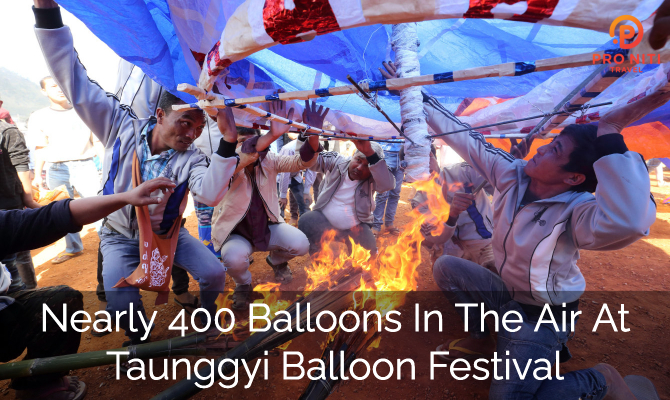
Nearly 400 balloons in the air at Taunggyi Balloon Festival 2018

Up in the mountains of Shan state, in the east of Myanmar is getting ready for a spectacular balloon festival. It will be held between 29 October and 3 November 2017. The event will see the launch of 393 traditional made paper balloons.

In a remote field in the mountains in mysterious Shan state in Myanmar, a yearly tradition is about to become even bigger. The whole country celebrates Tazaungdaing, the festival of lights in the middle of November. Especially the festivities in Taunggyi – the capital of Shan State are going to be more spectacular than ever, according to the organising committee.

During 6 days (from Sunday 29 October till Friday 3 November) there are food stalls, shops and games setup at the festival grounds south of Taunggyi. In total 266 papier-mâché hot air balloons in different shapes and sizes are launched in the afternoon between 11:00 a.m. and 15:00 p.m. In the evening around 20:00 p.m., it’s time for in total 127 big fire balloons. Once the balloon reaches a height of about 20 meters the fireworks attached to the balloons explode in all directions. A fun and fascinating festival which everybody should see at least once while in Myanmar.

Myanmar Tourism Marketing confirmed that there will be special-marked areas for foreign tourists to watch the launching of the balloons from a safe distance. Walking around the festival field is much fun as well, as thousands of Shan people are joining the grounds for some food, drinks and games.

The festival has been running for many decades and the Shan people are keen to keep the tradition of making these typical balloons alive. “I attended the festival last year and could not believe the size of these traditional balloons,” said an expat living and working in Yangon. “When they are all lit-up it’s magical and fantastic to experience – it is unlike any kind of firework display I have ever seen anywhere else” – he continued.

If you’re not in Taunggyi area (near the famous tourist destination – Inle Lake) around that time, it’s still a great time to travel in Myanmar. The monsoon rains are gone and their only reminder is a lush green scenery all over the country. It’s the time that yellow robes (and many other accessories) are offered to monks around the country. During the days before the festival, you will see bamboo poles with donations (including banknotes folded in beautiful shapes) around towns and villages.

During the festival, hot air balloons are launched throughout the country, although at a smaller scale and most of the temples organise weaving competitions. It’s a good time to be in any mid-sized town in Myanmar.

For the first time, the Myanmar government announced additional public holidays during the Tazaungdaing festival to compensate for the reduced number of days off during the annual Myanmar New Year in April. As a result, most Myanmar people will have leave from 2 – 5 November and use this long weekend to travel around the country. Be sure to book accommodation, flights etc. in time.

This news was written on Digital journey on Oct 24, 2017.[/fusion_text][fusion_text]Enjoy the fire balloon festival on Youtube by Jess Beauty Vanity

Planning to travel Myanmar? Our experts are ready to assist you, get in touch with us now.

We are
a proud member of

Enquire Now