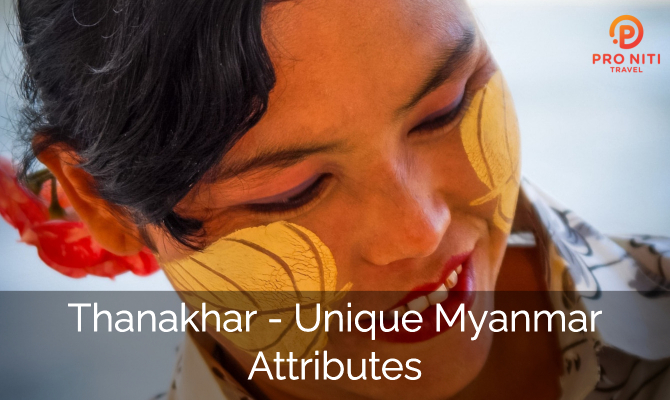
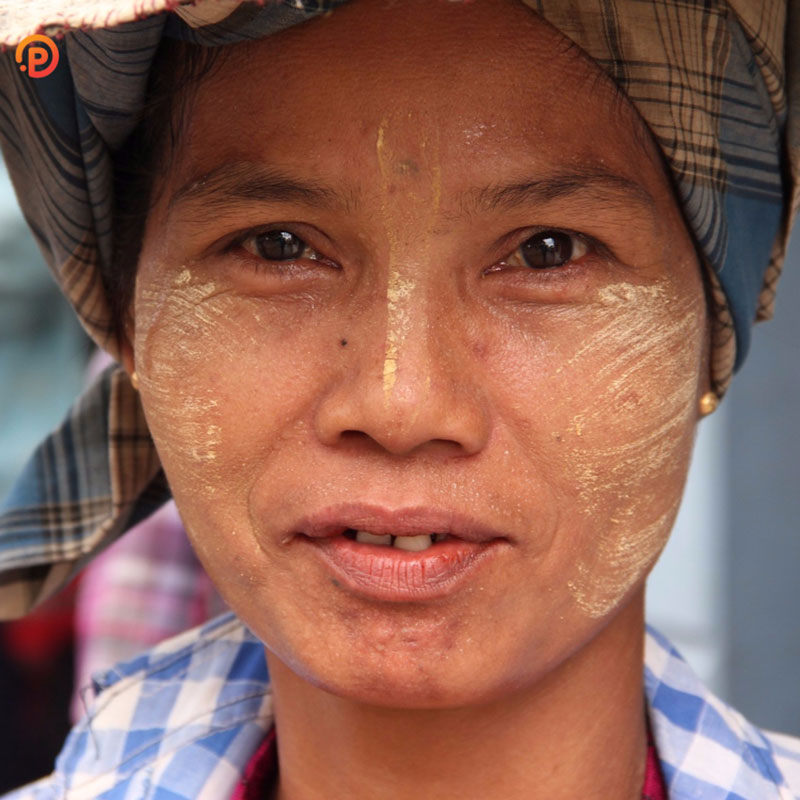
Thanakhar also spelled Thanaka and Thanakha, is a yellowish-white cosmetic paste which is a unique and distinctive feature of the people of Myanmar, formerly known as Burma.
Myanmar Woman with Thanakhar
Once you arrive in Myanmar, you will be received by welcoming smiles from faces covered in Thanakhar paste! People in this part of the world have been using Thanakhar for more than 2,000 years.
Over the centuries it has remained a prominent feature in the culture of the Myanmar people. Even in the contemporary music of Myanmar are songs about beautiful women with Thanakhar painted faces.
While not everybody is using Thanakhar these days, it is primarily, but not exclusively, used by women and children. Different people attach different motivations for its use.
Cute Kid with Thanakhar
Some use it as a sunscreen as it offers a cool sensation on the skin and blocks the sun. Others attach the higher value to its skin softening, skin whitening and anti-aging properties. It is also used as a beautifying cosmetic. Creative mothers even paint attractive designs on the school kids’ faces.
The paste is primarily made from the wood of the Murraya tree but is also made from the wood of several other locally grown trees such as the wood-apple tree. These thanakhar trees are grown in the tropical zones and there are many Thanakhar trees in the central areas of Myanmar. Wood is generally deemed mature enough once the tree is over 35 years old.
The two most famous products are the Shwebo thanakhar from the Sagaing region and Shinmataung thanakhar from the Magwe region. In addition, the Taunggyi Maukme thanakhar comes from the southern Shan State.
Traditionally users collected and ground the bark, wood, or roots, on a stone slab with water to get a smooth paste. While many people still prefer to use the traditional way of preparations, nowadays many users purchase ready-made thanakhar paste which is available in stores.
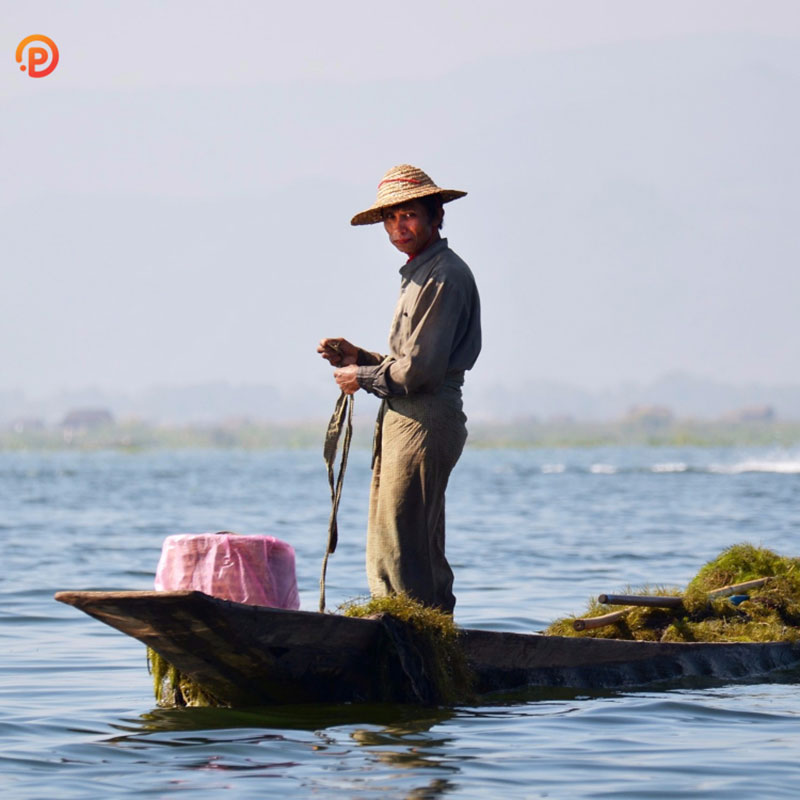
Intha from Inle Lake
The paste is normally used about twice per day – once in the morning and again before going to bed.
Short note about Myanmar:
Myanmar, formerly known as Burma, is located in Southeast Asia.
Bordering to the west is Bangladesh, northwest is India, China to the north and northeast, Laos to the east and Thailand to the south.
With a population of well over 50 million, Myanmar is known for its variety of ethnic groups, diverse cultures, tasty food, ancient city ruins dotted with stupas and temples.
Being under United Nations sanctions for many years, Myanmar is slowly being allowed back into the global village. Hence, tourists are scrambling to visit this incredible place with incredibly hospitable people!
What would be your first thought if you are doing research for your trip to our country to do something a bit different on this journey. If so, I bet you would first thing is to make the trekking by keeping in touch with the heartwarming locals to get the unique experiences. People who want to make the trekking usually come to Myanmar to take adventure treks and homestay are mostly keen to choose the most popular trekking places. So, we would like to lead you to the expeditions to 5 best places for trekking in Myanmar. These are the kind of cool places such as Keng-Tung, Hsipaw, Kalaw, Inle Lake and Chin state and will be the sense of mixing around with the locals as a result.
Keng Tung
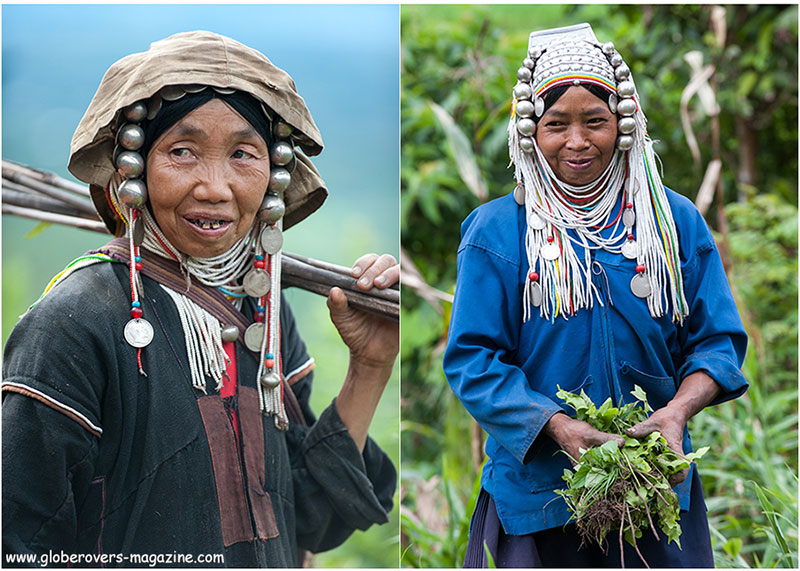
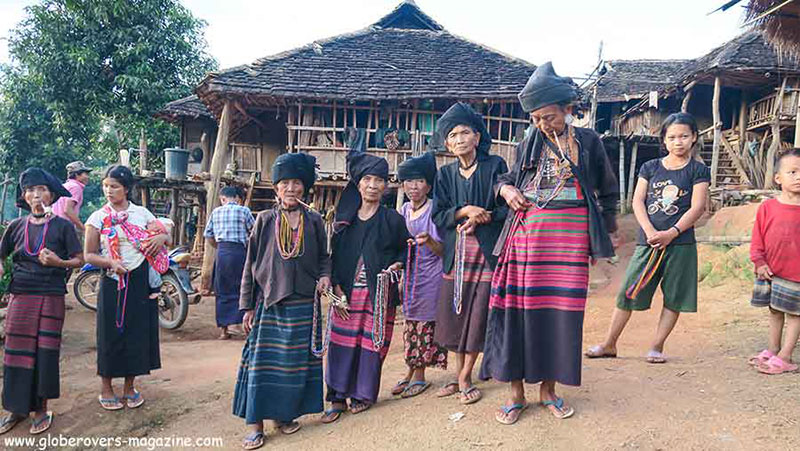
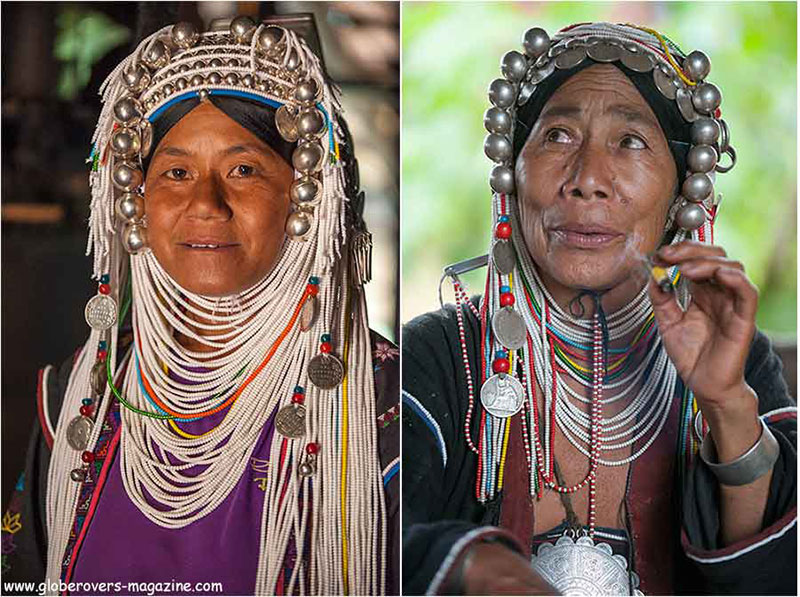
Akhu woman near Keng Tung
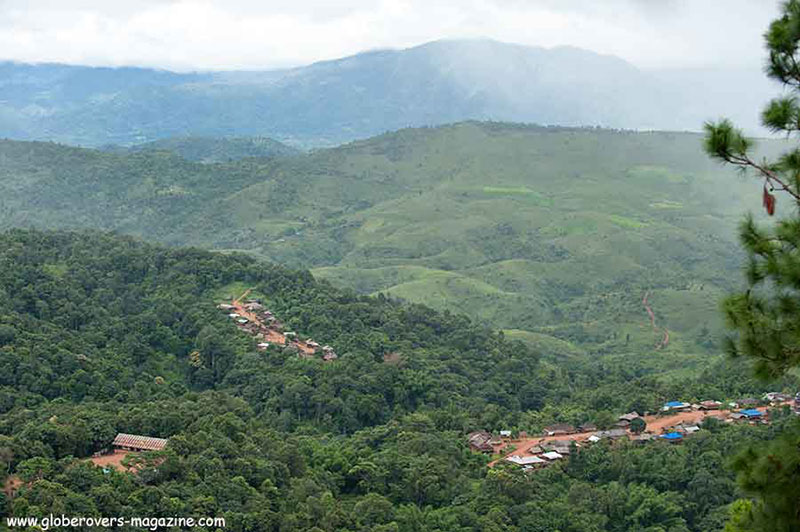
Keng Tung is one of the most popular expeditions in Myanmar even if you choose short or long trekking and walking. Visiting picturesque hill tribal villages by short trekking can memorize your trekking trip as the fascinating one. During your trekking through the stunning hillside, you may have the chance of visiting hill tribes such as Lahu, Akha, Lamone, Shan and so on.
By getting to and from each village, you can observe their unique, different costumes and beliefs of various tribes. The rubber plantation and seasonal cultivation fields will be the fascinating and eye-catching view, and the hill tribe’s geographical location and the authenticity of their lifestyle will be the main attraction of Keng Tung Tour. You can see the traditional Tribes with their colourful dresses that create their places a unique charm. Besides, on the way of your trekking, you have to pass the beautiful scenery through forests, terraced rice fields and you will have several stops to visit different villages.
You can exposure their daily lives in the rural areas and enjoy the magnificent view of the surrounding area of a temperate climate. At least, some travellers who want to make short trekking to visit different picturesque hill tribal villages can spend their time on the portion of Keng Tung. The tribal communities of Kengtung remain unchanged as they have for centuries and it is also the one you are finding for your short trekking with much impact.
Pindaya Trekkings
Pindaya is located in the southern part of Shan state, Myanmar. Pindaya is one of the areas which have their own administration. The tribes their lives are Danu, Palaung and Taung Yoe. Pindaya is also known as the land of Danu people which is one of the sub-group of Bamar.
Pinday is not the main destination and mostly, it was visited by combining one of the main destination, Lake Inle. You can reach there by the plan (Heho airport), by bus from major cities such as Mandalay, Yangon, etc and by private car. The main sites to visit at Pindaya are Pindaya caves with thousands of Buddha images, the Potetalote lake and umbrella-making workshop.
But, most of the people missed is the splendid adventure around Pindaya. One can do trekking around this area like 1-day hiking, 2 days 1 night around Pindaya, 3 days 2 nights around Pindaya, 3 days 2 Nights Pindaya to Kalaw and 3 days 2 nights to Pindaya to Ywa Ngan, which is very less touristy area yet.Pindaya – Yasagyi – Pindaya 3 days 2 nights trekking is one of the best trekking of this area and most popular one, too. This adventure trek’s physical rating would be moderate since you need to walk like 5 hours per day, but it is really worth to do so because of the beautiful nature around Pindaya, so welcoming locals and interesting stories of these people. Shan state was known as “the basket of the vegetables” because there are the variety of vegetables can be cultivated there. Local workshops like umbrella-making workshop, tea-leave making workshop, cheroot-leave making workshop are good to explore, too.
Kalaw Trekkings
Trekking around Kalaw
As you may know, Kalaw is famous as a former old British Hill station with colonial buildings and trekking paradise for nature lovers. A three-day trek through Myanmar’s Hill country from the town of Kalaw to Inle Lake would be the great experience to taste hilly regions and adventure trek. Or you can try day return and long trekking around Kalaw. To escape the heat of the sun, you can walk through the boreal forest by passing new the tea plantations. “The Viewpoint” where you can have the stunning view over rice paddies towards mountains in the distance is one attraction of the trekking trail in Kalaw.
During the trekking days, the scenery will be full of all farmland of the local villagers and offer you a spectacular view of the surrounding. So the lush landscape with enjoyable stunning views of the valleys(during the month of October to March) will attract you to continue your trail after. Along your path, you can take photos of the changing landscape and inspect the local wildlife. Likewise, the local villagers will be incredibly gracious people to the travellers. And the interaction with them by exploring their farmhouses, organic gardens, and their villages is one main reason for every traveller to learn more about the hill tribes’ lifestyles in the closer way.
Although you may think that some treks are hard, it will be an amazing experience to get away from the towns and roads by trying an easy trekking or walking in Kalaw. Besides, Kalaw is one of the most popular sites in Myanmar, and so you can have a designated trekking tour for your travel memories.
Trekkings Around Inle Lake
Locals working near the Inle Lake
Inle Lake is well known as ‘the Venice of the East,’ and it is always in the visitors’ bucket lists’ to witness the beauty of the lake with traditional leg rowers, floating gardens, floating markets and traditional fishing style. Indeed, Inle Lake has a lot more to amaze you with different exciting activities such as biking, horse riding or trekking. Some visitors connect Kalaw and Inle Lake with trekking routes between ethnic villages like Pa-Oh, Inn Thar, Palaung, and Danu.
If you would like to experience the beautiful trek without getting to Kalaw, you have choices to do trekking in or around Inle Lake. On the western bank of the lake, you can do 1D2N, 2D3N or day return soft trek by adding a hot spring relaxation at Khaung Dai Hot Spring. Through the tribal villages, you can feel the colorful landscapes covered by bamboo forests, vegetation, and sunflowers as magical views. Plus, you can learn about how they grow chili, garlic, sesame in the traditional way and know more of rural living of the tribes. The handicrafts workshops like bronze casting and wood carving are the attractions to stop you and so take some refreshment nearby.
You can also trek the villages along the eastern bank of the lake whether soft trek or long trek. If you are concerned about the community, you can trek to CBT (Community Based Tourism) area. From Phayartaung, a trekking point, exploring the southern part of the lake will be full of the pottery villages, soap-making villages, water spring and dramatic caves. Along the trekking way, it is a chance to experience the cheroot-leaves plantation, wild orchid growing, and tea-leaves plantation. Whether western portion or the South-eastern part of the lake you will make trekking at, the view from where you get to and the sense that you will have will be the better part of your trek excursions.
Hsipaw Trekkings
Gote Hteik viaduct, way to Hsipaw
The town of Hsipaw is situated in the Shan state of Myanmar, and now it becomes a light trekking hotspot for some travellers. Hsipaw offers a taste of real Burmese village life and some beautiful trekking routes in the surrounding countryside. If you would like to take short trekking to learn interesting things of Shan village, the cool villagers, lovely scenery with the mountain, valley and fruit plantations around the trekking trail will encourage your interest to visit Hsipaw.
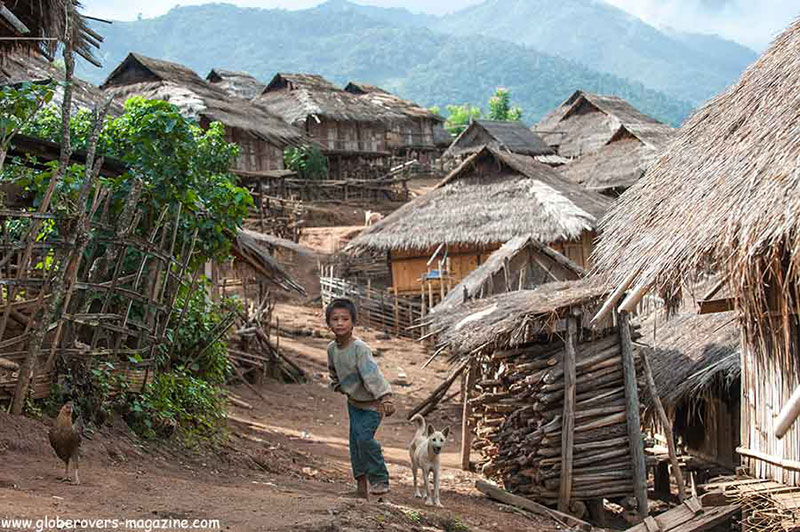
Almost all villages have typical houses with a small charming garden and fruit farms. So during your trek days, you can explore the villages by visiting the villagers’ families and checking out their way of life. The houses in the village were mostly constructed of bamboo and cement. Even if you are trying to chill inside the house one after another, the villagers are warmly welcome to you with the charming smile. While you are in the homestay, you will have the serving of delicious and traditional foods. The next thing is “Sunset Hill” that is the peak attracts significant numbers of trekkers and offers the panoramic view of the countryside.
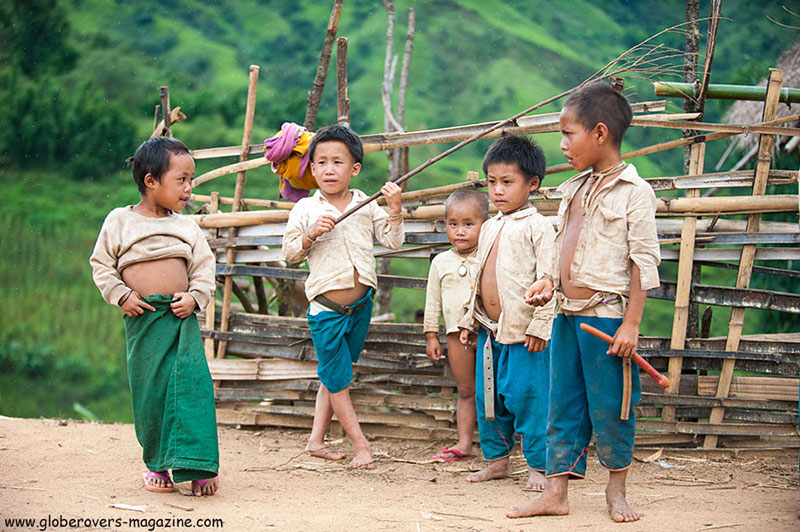
The most interesting feature of some villages is the curious children you may find hanging around the yard and the street. The trek round His paw is relatively easy, and you will find only the fewer temples, ancient ruins or cultural theatres. It is the best place to see the real lifestyles of the locals and their agricultural habits. And you can reach there by taking a train over the Goteik Viaduct.
Chin State Trekkings
Chin Woman near Mindat
Chin state is one of the good trekking places that you should notice if you aim to do some trekking in Myanmar. Impressive mountains, beautiful sceneries, and exotic tattooed ethics are always the keys to wander around the Chin Hill, and so you will have more authentic experiences. Natma Taung (Mt. Victoria) is the crucial place where almost all travellers are keen to do trekking. Since the trekking way is an elevated path, it is easier for you to make the hiking. It is part of the chin hill range and trekking up to Mt. Victoria is a great adventure while you visit the Chin Tribe.
During the trekking, you can observe the life of the Chin Tribe and will come across some breathtaking scenery and many wild orchids, colourful Rhododendrons flowers (Taung-Za-Lat), and several wildflowers and lush jungle with colourful butterflies. Mostly the Chin women who wear tattoos on their faces and amber necklaces can be seen in that region. The trekking trails are quite rough and well famous for travellers who prefer off-the-beaten-track. At some tribal villages, you will have the pleasure to experience a performance on the nose-flute by the Chin women. While trekking, you can enjoy the eye-catching scenery with great views and interesting flora.
Because the views are stunning and some great stones are made according to their spiritual beliefs and superstitions. So you can observe some aspects of their culture, customs, lifestyles, and traditions, and enjoy nature. The beauty of Mt. Victoria is awesome, and it will be the highlight of your trek way. So you will enjoy yourself for such a fun and informative trek in Chin state and imagine what your trekking day would be.
Well, now you reach the right place to search for the necessary information for the trek and hike in Myanmar. If you are looking for more travel experiences involving an authentic jungle trek, village immersion and a taste of the real hill tribes, surely, this blog would be helpful for you. And so you are ready to settle on the trekking trip in Myanmar by learning about the hill tribes and staying with their families during the homestay as long as you plan.
Thinking and planning to travel to Myanmar? Our travel experts are ready to assist you, get in touch with us now.
Meet Myanmar local is the place where you can learn more about the country from the point of view of Myanmar local. We interview local people what they think about their country, where do they recommend to visit in Myanmar and what kind of Myanmar food you should try and why you should visit Myanmar.
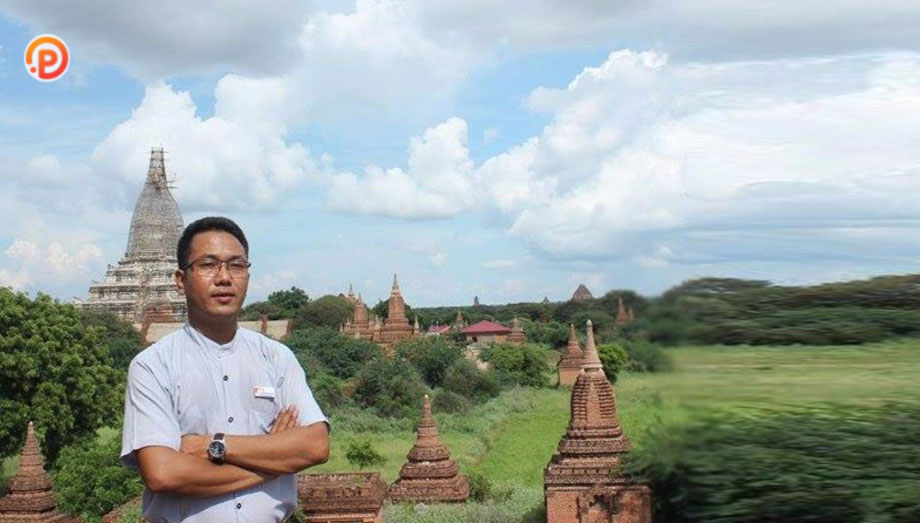
Thura Htut, Bagan Branch Manager
This week, we interviewed Thura Htut, local of Bagan region who is working as the tourist guide and serves as branch Manager for Pro Niti Travel. Thura Htut is 34 years and was born in Bagan. He went to UAE to continue his career in the hospitality industry and he went back to Myanmar during 2012 while Myanmar start opens to the international and he joined tourist guide training and start his tourist guide life since 2012, He joined Pro Niti Travel since 2013 at the beginning of the company establishment. Here is what Thura Htut opinions on Myanmar, his motherland.
Q1: What do you think are the best places in Myanmar to travel to and why?
Yangon, you can experience the lifestyle of people in the biggest city in our country, colonial buildings and some religious monuments.
Mandalay is the second largest city in Myanmar and the last kingdom was there as well. You can visit the golden monastery which is located in the palace. You can see the “world’s largest book”, traditional handicraft workshops, and monasteries where you can see the daily life of Buddhist monks and nuns.
Inle Lake (Shan state). Many different ethnic groups are living here. You can meet the Innthar who are fishing on Inle Lake and growing vegetables on their floating islands, different house styles and lifestyles. There are many natural caverns you can visit and you can do trekking around. It has very nice weather all year round.
Biking with Guest from Pro Niti
Bagan, it is one of the best archaeological sites not only in Myanmar but also in Southeast Asia. This is the place where the main ethnic group called Burmese is living. You can see many different religious festivals and visit the rural villages and chat with the friendly and honest local people.
Q2: Think of all activities that travellers to Myanmar can do. Which activities do you think are the most exciting and adventurous?
The most exciting activities in Myanmar are trekking, biking, bird watching, and photography.
Q3: Let’s talk about real Myanmar food. Which food is your favourite and why?
Fish paste curry with green chillies is one of the favourites for everyone in Myanmar, which we always have with different types of fresh vegetables and salad.
Q4: Tell us about your favourite destination in Myanmar. What’s the name of the place, where is it located, and why is it your favourite place?
My favourite destination in Myanmar is my native town of Bagan, located in the central part of the country in a dry zone. This is where you can see the architecture evolution of the temples, stupas and original Buddha’s images from different periods in the same place. This place has a lot of cultural value from thousand years ago. Come and see the scale and techniques of engineering works of the Bagan people and the religious monuments.
Pray inside Bagan Temple
Q5: Why do you think travellers like to visit Myanmar? What are they coming to see and do in Myanmar?
Because our country is very peaceful, rich in natural resources, and many cultural and religious sights to enjoy.
Q6: What is it about life in Myanmar that you like the most?
We have many different ethnic groups here in Myanmar. Each and every ethnic group has their own culture, traditions, and beliefs that I really like and appreciate. So, I want to invite all of you to come and visit Myanmar.
Golden Rock is located in Kyaik Hto township, Mon state and it is one of the popular destination to visit during in Myanmar Travel. You should not miss this in your very first time since it will give you memorable time while you are enjoying beautiful landscape along the way and even on the top of the mountain when you arrived. Golden rock is also a sustainable tourism site in Myanmar, too.
Kyaiktiyo Pagoda
How you can reach to Golden Rock (Kyaik Hti Yo)?
Kanbawzathadi Palace
Kyaik Pun Paya
You may take your private car to there from Yangon or you can even try train or buses from Yangon. It will take about 4 hours drive directly from Yangon to the base camp of the mountain and then, you have to take the truck up to the mountain which would be one of the memorable time on this trip for you. Taking open truck is a fantastic experience. If you worry your safety, you can still take the seat in front with the driver, too. But, we do recommend to take back seat to enjoy the scenic view along the way and have fun with other on the truck. You may take public transportation, you should check schedules with travel agents since there will be some short notice changes.
What else you can see along the way to Golden Rock?
If you take a private car, another destination you can add in your itinerary from Yangon to Golden Rock (Kyaik Hti Yo) is Bago, the culture city with rich ancient histories. Normally, start from Yangon around 8 am in the morning and start driving to Golden Rock, on the way, you can stop Htauk Kyant cemetery, hand-made pottery at the entrance of Bago City, visit Kyakhat Wine monastery to learn more Buddhism and their daily routines and have lunch at nice local Burmese food restaurant.
Tea shop from Bago
Start again, driving to the destination while you can also enjoy the scenic view of paddy fields along the way and countryside, so be ready your camera to shoot beautiful photos. After another 2 more hours drive, you will reach the base camp where you have to take the truck to top of the mountain. As mentioned above, if you are the adventure, you should take the seat the back of the open-air truck to enjoy the amazing view along the way and if you like to trek, you can get off at the Ye The’ Taung gate and you can walk to the top of the mountain about 30 mins. It would be the nice experience to try.
Where to stay in Golden Rock?
There are limited hotel accommodations on the top of Mountain, Golden Rock Hotel, Mountain Top Hotel and Kyaik Hto Hotel though there is the local-targeted hotel like Yoe Yoe Lay hotel, too. We would recommend spending a bit more for accommodation when you visit Kyaik Hti Yo Pagoda and stay at the top of the mountain though you can also overnight at the base camp, too. By staying at the top of the mountain, you can enjoy the magical sunset and sunrise as well. If you can get up early in the morning, you can also join morning food-offering ceremony which is very peaceful and nice to explore more about Buddism practices in Myanmar.
You may take the truck down back to the base camp around 0900 Am in order to have time to visit more places in Bago. You will take the same road back to Yangon and on the way, you should visit other attraction in Bago such as Kanbawza Thardi Place, Hinthar Gone Pagoda where you may also enjoy Spirit dance which held normally on weekends. You may also visit to Shwe Thar Lyaung pagoda, which is a bit similar with Chauk Htet Kyi pagoda in Yangon. Drive back to Yangon, don’t forget to try seasonal fruits which are available along the way.
Shwe Maw Daw Pagoda
Tips: If you have only two days, above itinerary would be a perfect one. If you have more time to spend on Golden Rock, there are other places you can extend to Mya Sein Taung, Nwar La Boh Taung, Saung Naing Gyi Waterfall, etc
While Myanmar is not considered to be one of the most ethnic and culturally diverse countries in the world, it certainly offers some of the most approachable and friendliest people on our planet!
With no less than 135 distinct ethnic groups officially recognised by the local government, the Bamar people account for almost 70% of the total population. Second in population numbers are the Shan people, followed by the Kayin, Rakhine, Chinese, Mon, Kachin and several smaller groups such as the Wa, Lahu, and Palaung.
Shan State, located in the central far eastern part of the country, is the largest administrative region of Myanmar. Covering an area of almost 156,000 square kilometres, this state shares international borders with China to the north, Laos to the east, and Thailand to the south. With an estimated population of almost 6 million people, it is the fourth most populated region after the Yangon Region, the Ayeyarwady Region, and the Mandalay Region.
What truly sets Shan State apart from the rest, is the historic cultural influence from its neighbours, particularly China and Thailand.
The Shan people, who dominate this state culturally and economically, arrived in this area along with the Mongols when the Pagan Kingdom (the first Burmese empire: 849 to 1287) fell to the Mongols in the 13th century. The Mongol invasion was launched after the last true ruler of Pagan, King Narathihapate (who reigned 1254 to 1287) refused to pay tribute to Kublai Khan, the “Great Khagan of the Mongol Empire”. The Mongols, under Kublai, delivered a crushing defeat at the “Battle of Ngasaunggyan” (1277), followed by the Battle of Bhamo (1283) and the Battle of Pagan (1287), which then brought an end to the Pagan Kingdom and the construction of the temples at their capital, Bagan.
Along with the victorious Mongols came the Shan people who made this part of the world their new home and quickly dominated much of the eastern and northern regions of Myanmar. They claimed much of the fertile lands and became powerful landlords, dominating all other ethnic groups.
At the time when the British took over Burma, which lasted from 1824 to 1948, there were 18 major Shan states ruled by royals, and 25 lesser states ruled by other officials. When the border lines with Thailand were drawn up, the eastern states became part of Thailand, while the central and western states paid tribute to British Burma.
After independence from Britain, the Shan people engaged in a military struggle to gain more autonomy from the Burmese-Myanmar government. However, by 1996 most groups had signed a peace treaty with the Yangon government, promising more autonomy to the various ethnic groups.
The ethnic minorities, such as the Wa, Palaung (Ta’ang), Akhu (Akhe), Akha, Lisu, Lahu, La (Ka-La), Loi (Ka Wo), Ann (Eng), Pa O, and others who mostly arrived from Tibet and China, were forced to mainly inhabit the green rolling hills around Shan State, hence becoming known as the “hill tribes”.
Taunggyi, the capital of Shan State, is located about 260 km to the south-southeast of Mandalay, Myanmar’s second largest city after Yangon.
Just over 400 km to the far eastern part of the state, lies Kyaingtong (also referred to as Kengtung or Keng Tung). Located east of the Salween River, at the crossroads of trade routes to neighbouring Thailand, Laos and China’s Yunnan province, it is the largest town in eastern Shan State and was once known as the capital of the “Golden Triangle”.
During British rule, it was an important British administrative outpost, as the leftover colonial buildings can attest.
Decades of an ethnic insurgency, a brutal military rule, and smuggler economies, have left much of the region impoverished and under-developed. The region is known for its trafficking of resources, people, drugs and endangered species. Mong La, at the Chinese border, is a shabby border town which has grown to become a key hub of trade in endangered animals and animal products. It is known as one of Southeast Asia’s largest open wildlife markets where rare animals, many of which are protected by international treaties, are sold to Chinese buyers.
Since the region opened to foreign tourism in 1993, it has become an appealing “off-the-beaten-track” destination among intrepid travellers who crave authentic experiences unaffected by western values. However, tourism remained insignificant prior to the victory of Aung San Suu Kyi in the 2015 elections and her subsequent role of State Counsellor in April 2016. Since then, Myanmar has seen an increase in foreign tourism, though the Keng Tung region still hosts an insignificant number of tourists. Mong La near the Chinese border and its surrounding areas remain off limits to foreigners as well as Myanmar citizens who don’t have a valid reason to visit.
One reason for the limited arrivals in Keng Tung is the rebel activities in the wider region. Foreigners are presently not allowed to travel overland to Keng Tung from other major tourist hubs in Myanmar such as Yangon, Mandalay, Inle Lake, or the state capital Taunggyi. However, the road leading from northern Thailand is currently open to tourists.
It is reported that fewer than 5,000 foreigners (most are Thai day-trippers) have ventured into Shan State from across the Friendship Bridge at Thailand’s most northern town of Mae Sai. Few visitors continue north to Keng Tung.
Travel from within Myanmar can only be undertaken by a domestic flight, mainly limited to departures from Yangon, Heho, and Mandalay. In the rainy (or green) season, the number of flights is reduced.
THE PLEASANT CITY OF KYAINGTONG (KENGTUNG OR KENG TUNG)
The city of Keng Tung – meaning “Walled City of Tung”, was founded during the migration period of the Chiang Mai dynasty (which became known as the Lanna Kingdom) in the 13th century. Other cities founded around the same time include Chiang Rai and Chiang Mai in northern Thailand, and Yunnan’s Jinghong city. Reminiscent of Chiang Mai, Kyaingtong city was once surrounded by a moat and earthen fortified wall with twelve imposing gates. Only one of these, the Pa Leng Gate, is still standing. Find it next to the local authorities’ Mother and Childcare Department and nearby Princess Hotel.
The Keng Tung Palace was built by Sao Kawng Kiao Intaleng (the 40th Prince of Kyaingtong) between 1905 and 1906 after being inspired to build an imperial Indian-style palace during his trip to India. Built from huge teakwood logs, featuring minarets and intricately carved lacquered teak interiors, the palace was home of the Saophas (meaning “lord of the heavens” or “lord of the sky” hereditary rulers) of Kyaingtong, until they were driven out, exiled or arrested during a military coup in 1962.
Kyaingtong is rather remote within Myanmar and not as Burmese as you may think. In fact, it is more Chinese and Thai and it is not what you may have seen or experienced in places like Yangon, Mandalay, and Bagan. Few local Shan women or even women of any of the hill tribes wear the usual de rigueur Thanakha paste on their faces. You won’t see many men in their longyisanymore, and neither will you find the popularBurmesefood restaurants which you may have grown to enjoy in the big cities.
If you can detect the differences in spoken language, you will also realize that very few people speak Bamar, the Burmese language. The urban population and the villages are spread out across the fertile valleys. They mainly speak the eastern Shandialect, which is quite similar to Thai. Keng Tung is still an important administrative town for the Myanmar government so you will come across some Bamar-speaking people employed by the government, such as the police, military, and their families.
Situated in the centre of a wide valley, the picturesque town with some 170,000inhabitants is surrounded by three main hills with a rectangular teardrop-shaped Naung Tung Lake at the centre. A beautiful location indeed. It is a pleasant town to walk through and to mix with the friendly locals at the many eateries around town, particularly those around the lake’s shore.
There is little sign of new construction around town even though it is increasingly benefiting from cross-trades with China and Thailand.
A few colonial houses can be seen around the lake and old teak houses line the winding streets around the stupas at the top of the hill. Still standing outside the northern corner walls of the hotel is a beautiful, albeit dilapidated, colonial house. During the administration of the Kyaingtong princes or “Saohpas”, this house was called “Haw Hong” (Northern Palace). Apparently, the owner left this house for his caretaker to maintain, and here the story ends.
Near the Amazing Kengtong Resort, look out for the Maha Myat Muni pagoda, known in Shan and Thai as Wat Phra Jao Lung, which is home to a replica of the revered Mandalay statue.
Constructed during the 13th century, the intrinsic Wat Jom Kham (or Zom Kham) and its adjacent Watin Monastery, are believed to enshrine six hairs of the Buddha, left behind after he prophesied the city’s establishment.
High on a hill overlooking the city, stands the 20-metre high military-built Buddha statue pointing across the town. The statue is lit up at night and can be seen from afar.
Also towering over the city at One Tree Hill is a solitary 264-year old tree (named Thit Ta Bin Taung in Burmese orKanyin Phyu inShan)which reaches 66 metres high, with an upper girth of 11m and lower girth of 12m.
At dusk, a popular retreat for the locals is one of the many restaurants and small eateries and drinking spots dotted around the centrally locatedLake Naung Tong. The BBQ joints serving Myanmar Beer with ice cubes are particularly popular, complete with their short-legged tables and baby chairs. You will feel as if you are sitting in a doll-house!
In the mornings before heading out to the hill tribes, drop by the bustling Central Market which is the commercial centre of town. Here you can find dried frogs and several types of dried worms, as well as live larvae of the vespa auraria hornet, still encased in their paper nest compartments and seemingly moving in tandem with the rhythm of the market. Stop by at one of the many small eateries inside the market to taste the famous spicy Shan noodle soup as well as the pork ball noodle soup.
Natural Beehive
The Central Market sells anything you can imagine. Pick up a new hat, raincoat, shoes, and other clothing at bargain low prices. Stock up on fruits, dried fish, and other snacks. Don’t forget some medicines (such a pain relievers and “tiger balm” cream) for the tribes and healthy snacks for the kids. They certainly will highly appreciate every bit you will bring their way. Avoid any over-packaged goods to limit the amount of garbage created in the villages. Bring back all packaging materials you take into the village and dispose of it in the town’s garbage bins.
At the market look out for the colourful hill-tribe women who come here to trade their produce. Money chargers sit around at the small tables and happily accept Thai baht, Chinese Yuan, and US dollars. Other major currencies may be accepted too.
While Keng Tung has much to offer and can easily keep you occupied for a few days, the main reason why foreign visitors come here is to head out of town. So grab your hat, sunscreen, walking stick, and your mandatory local guide. The guide and his driver will make sure everything goes smoothly and you will pass through a few checkpoints without any hassle. Do take along your passport.
Every night you will need to return to Keng Tung as foreigners are currently not permitted to stay overnight in the villages, or anywhere outside of town.
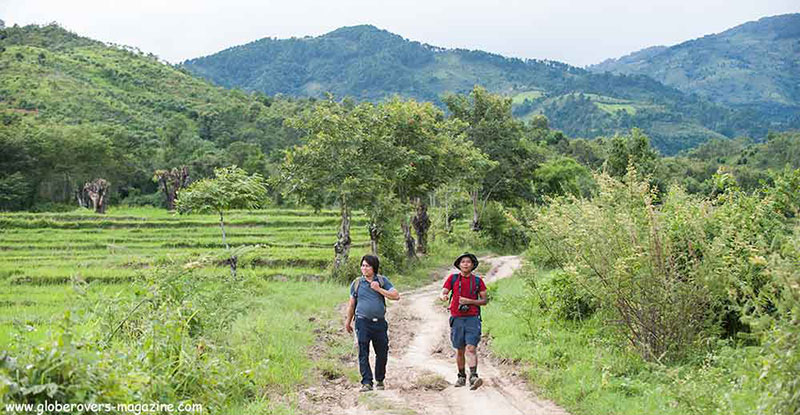
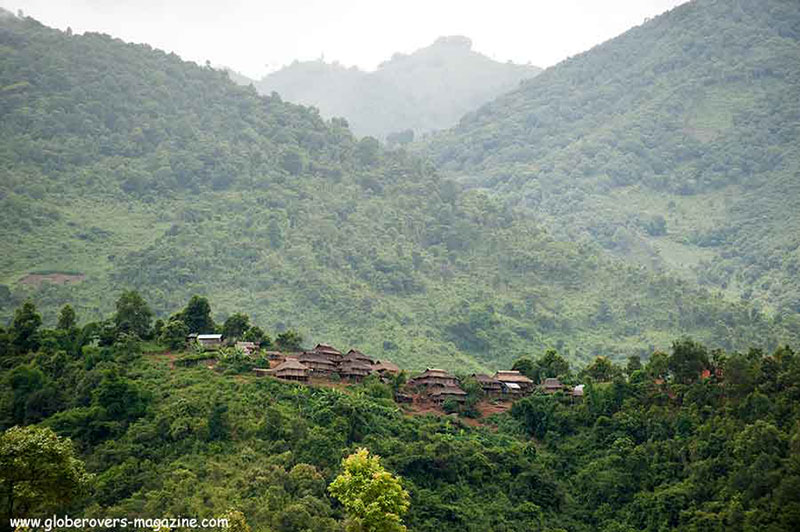
It is possible to hike to various hill tribe villages in all four directions. Some of the most accessible villages are a short drive out of town followed by a short walk. These are typically the most-visited villages, though you may not come across any fellow travellers, especially in the green (low) season. The more remote villages are further out of town and hiking can be up to three or four hours away in any one direction. If foreigners were allowed to overnight out of town, then the more remote villages could be explored. Even so, an early start to the day with a brisk hike can take you some distance into the hills to reach some of the remote villages which hardly ever encounter foreigners.
Myanmar is known for its friendly people. Known as the “real land of smiles”, or the “land of the biggest smiles”, the people of Myanmar are one of the main reasons why foreigner travellers come here, and return multiple times. Whether they are the predominant Bamar people, or the other main groups such as the Chin, Kachin, Kayin, Mon, or Shan people, they are generally very friendly and respectful of foreign visitors. But, wait until you have met the hill tribes, in particular those around Shan State. While language is obviously a problem to connect with foreign travellers, you will have a local guide with you who speaks the local dialects, which are mostly unique from one another and quite incomprehensible to the Bamar people. With your guide by your side speaking the local dialect of the tribe you are visiting, you will be astounded with how inquisitive these people are about your life. Their hospitality will warm your heart and you will experience the warmth you have come to enjoy. Therefore, make sure you bring a few gifts of your own.
While language is obviously a problem to connect with foreign travellers, you will have a local guide with you who speaks the local dialects, which are mostly unique from one another and quite incomprehensible to the Bamar people. With your guide by your side speaking the local dialect of the tribe you are visiting, you will be astounded with how inquisitive these people are about your life. Their hospitality will warm your heart and you will experience the warmth you have come to enjoy. Therefore, make sure you bring a few gifts of your own.
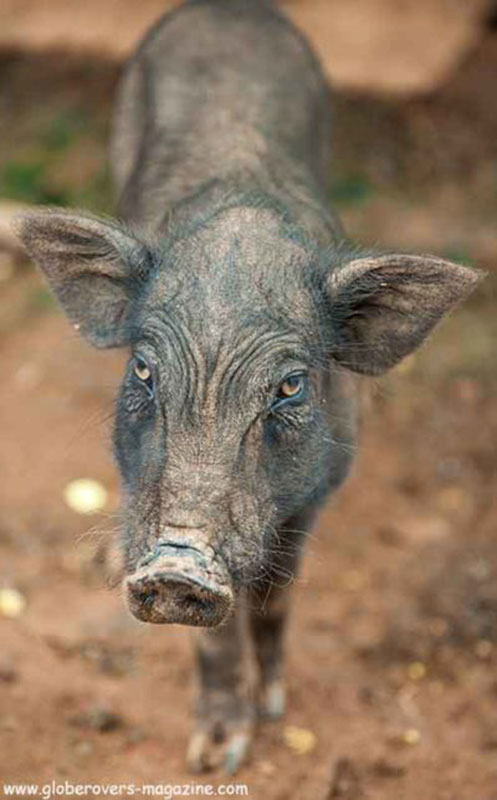
Some of these villages are very remote and don’t have any shops nearby to buy food, medicines or anything else. It’s a very long hike for them over the hills to the nearest settlement where they buy limited supplies with the little money they have. Money is mainly generated from trading their animals such as pigs, chickens, and cows (or buffaloes), and from the rice and vegetables they produce on the green terraces. Bring along headache tablets and ointments for pain such the local version of Tiger balm. Best not to bring different medicines as most villagers have never been to school and are completely illiterate. You don’t want them to confuse headache tablets with heart tablets or laxatives.
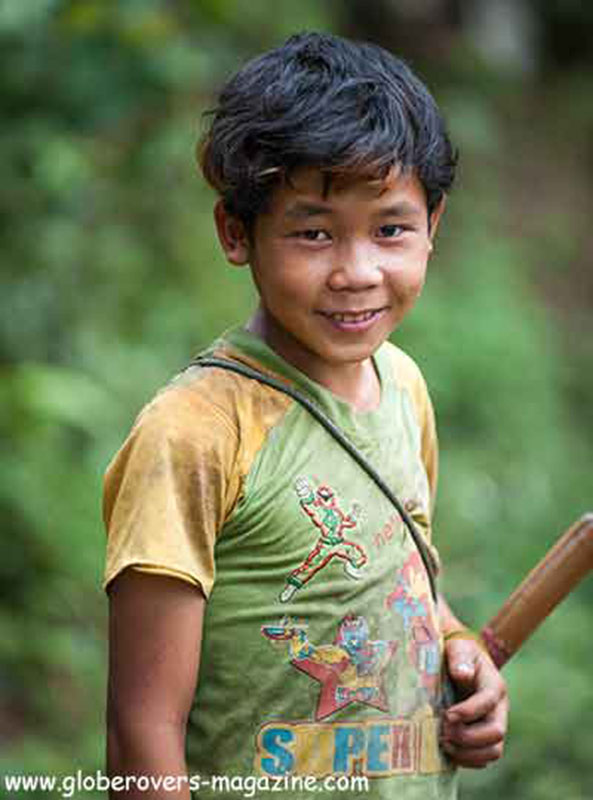
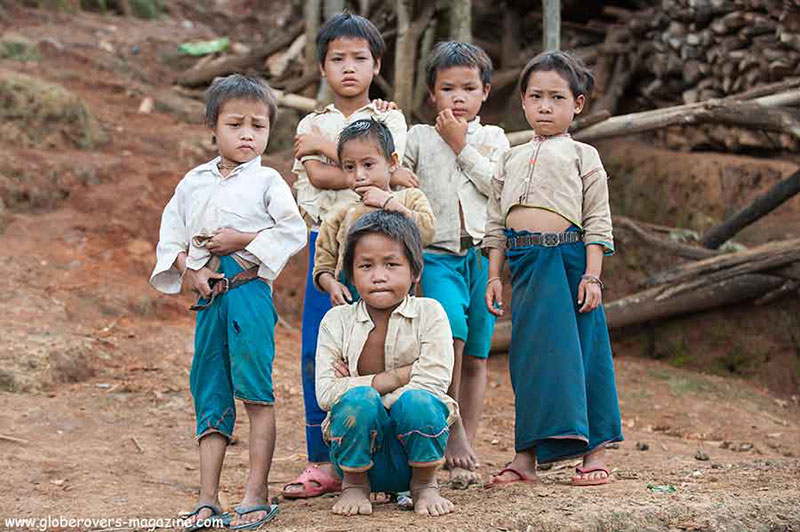
Kids are kids, and in these remote villages the kids hardly ever get the pleasure of eating something special. While candies are not recommended by proponents of sustainable travel, bring along some healthy snacks. Fresh fruits are good gifts but do check with your guide which fruits are available in the villages, such as bananas. Clothing is another great gift, but again check with your guide as many tribes have strong clothing guidelines to reflect their cultural heritage. Be creative with your gifts and in doing so you will return their hospitality multifold.
There are several main groups and subgroups of tribes reachable on day trips from Keng Tung. Among these are the Wa, Palaung (Ta’ang), Akhu, Akha, Lisu, Lahu, Loi, Ann, Pa O.
The normal marrying age of the hill tribe girls is about 14 years, or as soon as the girl has her first menstrual period, which is the sign of reproductive readiness. By this time girls normally have their future husband in mind, and as sex, before marriage is not allowed, the two will soon get married, normally paid for by the boy’s family, and almost immediately start working on their first baby. Couples are generally of similar age and the family does not enforce their own decisions on who should marry who. It’s all determined by love and each selects their own future spouse.
Contraceptives are not allowed, and neither are they available, often never heard of as these people live very basic lives with limited or no education. Therefore, most women give birth to several children during their reproductive lifetime, though child mortality is high and many will not survive to become adults. Should an unmarried girl fall pregnant before marriage, it is referred to as a “mistake” and in some villages the boy’s family needs to pay the chief of the village compensation, such as buying him a pig which is then slaughtered and shared with the people in the village. If the parents of the couple agree to the marriage then so be it. However, should the parents not agree to the marriage, the boy’s family need to pay a substantial compensation to the girl’s family. The girl will remain with her parents with the new baby. Newly married Wa Ann couples will move in with the boy’s family, although some tribes have the rule that the newlyweds move in with the girl’s family.
Almost all babies are born at home, often with the help of a local midwife or a government-provided nurse. Babies are not officially registered and the exact birth date is unimportant and generally not remembered a few weeks later. What is important though, is the lunar year of the birth. So, adults know in which lunar year they were born but have no idea how old they are or when exactly they should celebrate the exact day of their birth. Birthday celebrations don’t exist among these hill tribes. About two to three weeks after birth the new baby will be given a name, which is done during an important ceremony attended by the entire village.
Most of the hill tribes have no access to toilets, other than to head into the nearby bushes. There seems to be little need for toilets among these people, as some tribes have turned down suggestions by concerned outsiders to fund the construction of toilet facilities. Pro Niti Travel is planning to provide toilet facilities in those areas in near future.
The chief of the village, and the shaman (medicine man), are the most important individuals in the village. The chief of the village is responsible for most of the important decisions and arbitrations in the daily life of his village. His term could be for life, or could be as short as a few weeks, depending on his own job satisfaction and the approval ratings from his villagers. Most often the chief is selected for a few years and then turns over his important duties to a new chief. Most villages also have a shaman, who is more prominent and revered among Animist villages, than in Buddhist or Christian villages. Among the Animists, the shaman, which is an inherited and lifetime position, is responsible for calling up the ancestors for advice and for keeping the communication channels open with the spirits of the “friendly ancestors”.
He is also tasked with keeping the evil spirits away which includes performing of rituals at designated places in and around the village, as well as in his house and sometimes in the houses of the villagers. He is also the medicine man of the village, an almost exclusive role in the non-Animist villages. In some villages, the shaman may be the first person to meet visitors and will conduct a welcoming ceremony and pray for each individual while holding their hands. Larger villages may even have more than one shaman to take care of the many tasks laid upon them.
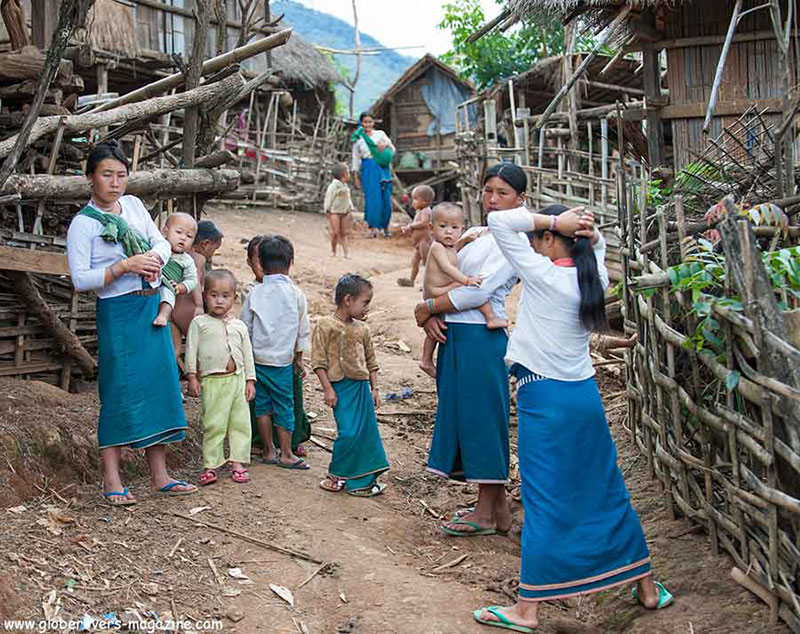
Both men and women work in the farmlands around the villages. Even young boys and girls work in the fields. Once a girl has a baby, she may stay in the village to take care of the baby. Once the child is old enough, the mother goes back to working in the fields while family members, such as grandmothers, look after the child. Men are generally responsible for the building and repairing of houses and for making knives and axes at the blacksmith hut. Women are generally responsible for procuring and preparing food, though men easily take over when the woman is away or not able to cook.
Medicine as we know it, does not exist in most of the hill tribe villages. They either use remedies collected from nature, or if that does not help they may go to another village and ask for help. In serious cases, they may go to a nearby town and get medical help, though money is limited to pay for medicines and treatment.
Neither the federal nor the local governments provide much, if any, support to these communities. Unless villages establish their own education systems, there are no schools in the villages. The result is that most of the hill tribes are illiterate, though this is slowly improving.
After life comes death! Upon death in a Christian village, the local priest and the chief of the village visit the deceased body in the family home, and after prayers and blessings, they prepare for the washing of the body. The head of the body must always face east. A few animals will be slaughtered and food prepared for the village. Within three days the body will be buried outside the village. Some Buddhists cremate the bodies, though all Animists will be cremated. Unless the body is cremated, evil spirits may invade the dead body before or even after burial and the body may then return to the village with a bad spirit such as a vampire or a tiger.
TREKKING ROUTES AROUND KENG TUNG
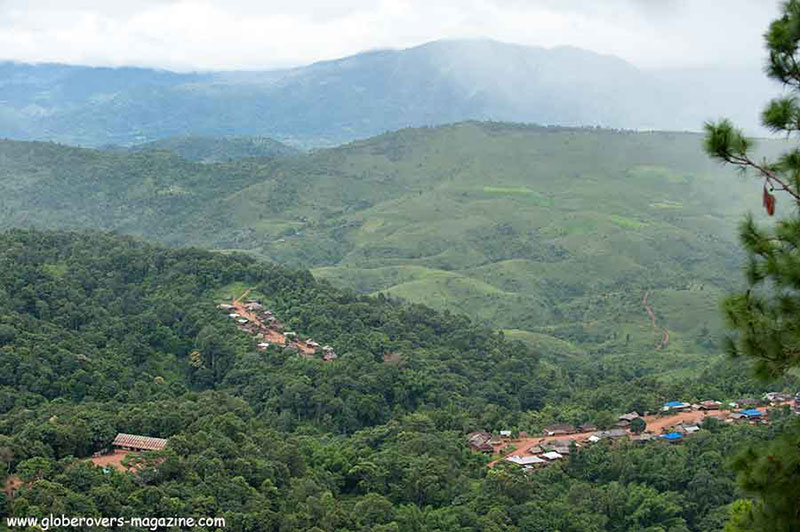
There are many villages in the lowlands along the valley, mainly inhabited by the Shan people. The hill tribes are, as you may expect, mainly in the hills, in all directions. It’s hard to judge which tribes are the most interesting. All of them are very hospitable to foreign travellers. Some villagers are more “well-off” than others but all seem to be fairly self-sufficient, albeit very basic living. Some villages still protect their traditions such a clothing and architecture, while others have adopted more universal “Western” ways of life.
EAST OF KYAINGTONG: Wa Ann and Akhu tribes
About 10 km to the east-northeast of Kyaingtong, passing through wide patches of rice fields, is one of the more easily reached villages of the hill tribes. The village, named Wan My, is home to the Wa Ann (also written as Eng or Enn) tribe with about 300 people living in the 32 very basic houses. There is currently no school in or nearby the village so most of the inhabitants are illiterate.
The people in the village are either Buddhists or Animists.
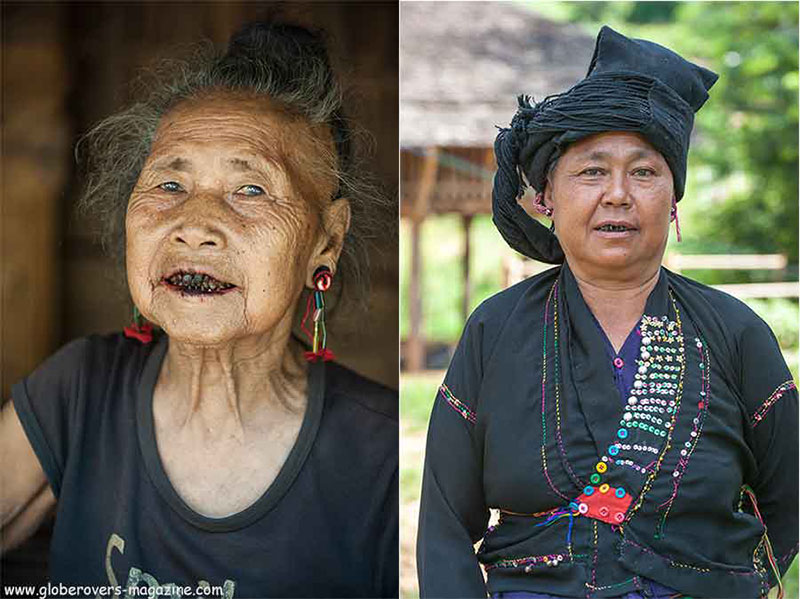
The Wa Ann tribe is known for their black teeth. From the time they get married, women use the bark of the chestnut tree which they burn to charcoal to blacken their teeth. This is further enhanced by chewing a mixture of tobacco leaves, the bark of a young chestnut tree, and grounded limestone. The daily use of these items will cause the teeth to become black, though total blackness of the teeth is not achieved until a more mature age.
The main reason for this unusual love of black teeth is due to their belief that animals have white teeth and that humans should be different and have black teeth. This elevates humans above animals. The blackening of the teeth is also believed to protect the teeth from decay, and to prevent bad breath. These people obviously do not use toothbrushes and toothpaste.
The Wa Ann people still wear traditional clothing, which is mainly a black blouse with a few rows of rainbow-coloured embroidery around the arms and along the lapels. Their black skirts are adorned with thin horizontal rainbow coloured lines.
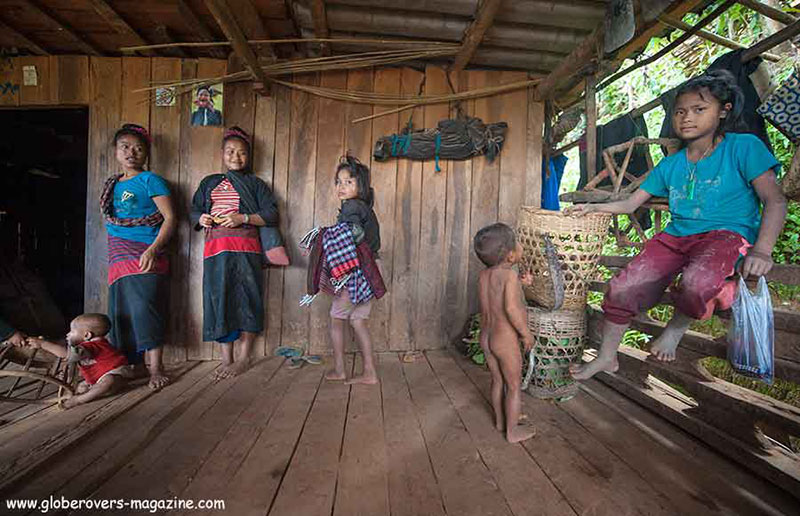
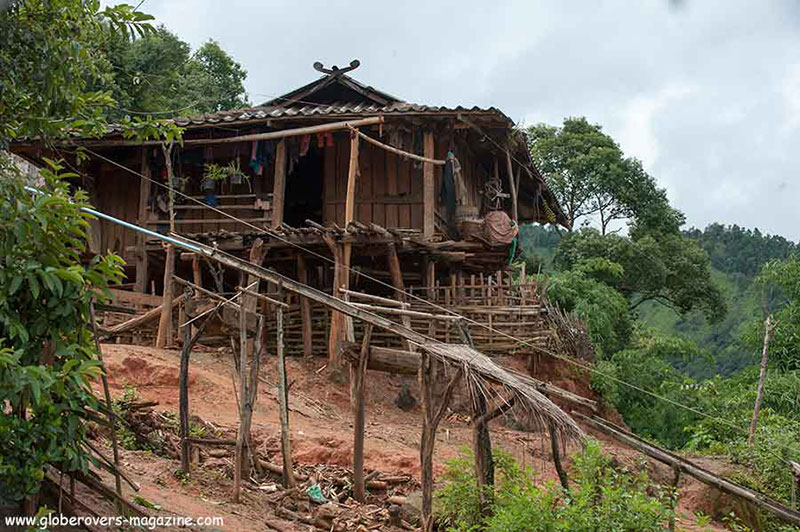
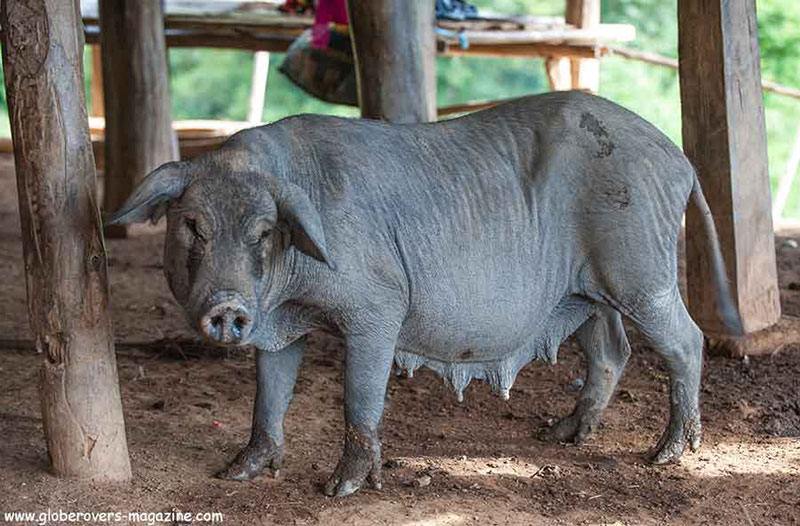
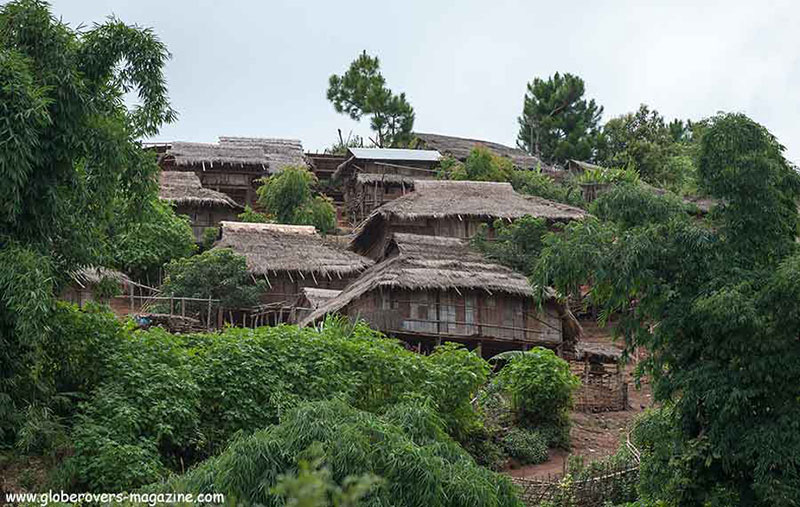
Houses are very basic wooden constructions which are raised high on stilts with wooden shingles to cover the roofs. The open area below the house is normally where the animals, such as pigs and chickens are kept in their fenced enclosures. During the day the animals are allowed to roam freely around the village.
Not far outside Wan My village is the colourful Ko Yin Lay Monastery (Junior Monk Monastery) situated on the banks of a murmuring stream. As the name suggests, this 37-year-old monastery is dedicated to novice monks. At the time of visiting, about 60 to 70 novice monks, cladded in their mix of orange and burgundy robes, were living and studying here. Vegetarian meals are served daily at 06:30 and again just before noon.
Some of the novice monks are so young, one wonders how they live here without their parents. Local men at the monastery are incredibly friendly and will likely invite you for tea and bananas on the carpeted floors in the middle of the temple. Look out for the old ladies in traditional Wa Ann dresses who meticulously sweep the floors every few hours. They are totally emotionless and seem to be in a trance as they sweep so gently with their long grass brooms.
Located high up on a hill, with stunning views over the rice fields and rubber plantations, is the Kabar Aye monastery (meaning War Peace Pagoda in Burmese but referred to as Pra Htard Zom Doi by the Shan people). This 1,200-year-old monastery has been rebuilt and renovated multiple times over the centuries. Some of the oldest parts of the monastery are inside the covered pagoda which has four large Buddha statues, each facing towards one of the four directions. Look out for the exquisite gold-leaf motives on the inner walls and the sparkling domed ceiling.
Note that no women are allowed inside the pagoda as it is believed that it contains one of the Buddha’s hairs. The monastery provides no accommodation for either monks or visitors who often come here to meditate in the spacious meditation room overlooking the valley. Usually, only one monk and a few novice monks are around to take care of the facilities.
A few kilometers in the direction of Kyaingtong and a short walk from the main road lies the Akhu village of Wan Sai. As the name implies, the Akhu is believed to be originally a subgroup of the Akha. The Akhu tribe is small and lives in one of only four groups around the Kyaingtong area. Wan Sai village consists of about 172 people living in 29 houses. Some 20 years ago something sinister happened in the village. At that time most people converted from being Animists to Christianity (Baptists). The village is known for their friendly pipe-smoking women. Tobacco from nearby fields is dried and smoked in their long home-made pipes.
The women all appear to be very experienced too, slowly puffing on their pipes for a while before having to reload and reignite. They are very happy to sell you a pipe and load it for you. They really get excited about sharing their smoking tradition with visitors, while trading their home-made beaded necklaces for a few kyatt (local Myanmar money).
SOUTH OF KENG TUNG: Akha tribe
Southeast of Keng Tung lies the Akha village of Ho Lap and the Naung Cho village of the Wa people. High on the hills, about 30 km from Keng Tung is the town of Loimwe, meaning “misty mountain”, situated at an altitude of 1,600 m. As a former British hill station, the town has a few decaying colonial houses which are reminiscent of the colonial era. Still standing is an old Catholic church which was built by an Italian mission early in the 19th century. An old post office still stands on the lake shore.
Along the road to Tachileik, at the Myanmar border with Thailand, a lengthy hike along a steep path past coffee plantations and rice paddies leads to the Ho Kyein Akha villages. Ho Kyein Htet village is home to about 400 Akha people living in 65 houses.
The Akha is the “true hill tribe” as they mostly live at relatively high altitudes and survive mainly on a slash-and-burn economy. While their agricultural methods are rather crude, it sure works in the nutrient-deficient soil typical of these high elevated hilltops. Their main crops include mountain rice, soybeans, and corn.
The Akha people here are either Animists, Buddhists or Christian (mainly Catholics or Baptists)- a diversity of religions living in harmony.
A typical animist Akha village will have two entrances, each with an arching gate standing about two metres high, referred to as a “Law Kong”. At the top of the gate’s wooden cross-beams you will find carvings of birds, swords, and star-shaped charms. Along the sides of the gates are wooden statues of men and women to ward off evil spirits coming from the nearby jungle. It is also believed that these statues prevent disasters and diseases from entering the village.
The Akha tribe differs from most other tribes in how they treat their newlyweds. While most tribes have the new bride moving in with the groom’s family, the Akha’s rule is that the newlyweds need to set up their own nest away from the family home. Only once the father (head of the family home) dies, then his eldest son and his family may move back to the family home to take care of the father’s wife.
Now that the eldest son is head of the family, he is no longer permitted to sleep with his wife. The only time they are allowed together on the same bed, is during sex. Once the act is over, she must move back to her own bed to sleep. There are some variations to the rule as there are a variety of religions in the village, though all people are Akha and generally adhere to the Akha traditions.
Some Akha Animists have a strict rule that a married couple should never ever sleep together as the man would then lose his power, and here is the reason why: According to folklore, hundreds of years ago an Akha man went to work on a farm every day. One day, he met a beautiful lady. However,unbeknownst to him, she had a big secret. She was a dragon-lady who was human during the daytime but turned back into a dragon after midnight. Day after day they walked past each other and smiled. Then one day she spoke to him and they soon fell in love. He took her to his village to meet his parents and they all agreed it was a perfect match, and so they married. On the very first night, she revealed to him part of her secret. She explained that they could be in bed together in the evenings and make babies, but she could not sleep with him throughout the night as he would then lose all his power. She did not want to reveal the truth that she would change into a dragon at midnight. He agreed, had sex, and then had to leave her room before midnight. Since then, women and men do not sleep together. While there are no dragon ladies, men still believe they may lose their power. So, now there is a room for the men and a separate room for the women in the house.
Since then, women and men do not sleep together. While there are no dragon ladies, men still believe they may lose their power. So, now there is a room for the men and a separate room for the women in the house.
The Animists also believe that the birth of twin babies brought bad luck to the village as the babies are regarded as being of inferior quality like animals, which happens because of reincarnation. In the distant past, the twins’ parents had no choice but to either change religion, or to kill both babies. Nowadays their options are easier. They can give up the babies for adoption. However, the parents must also stay away from the village for one year, or move far away from the Animist village to where there are Christian or Buddhist people.
The Akha people place high value on boys in the family. If a man’s wife has borne him four consecutive baby girls, then he is allowed to try his luck with a second wife, which is generally well-received by the first wife.
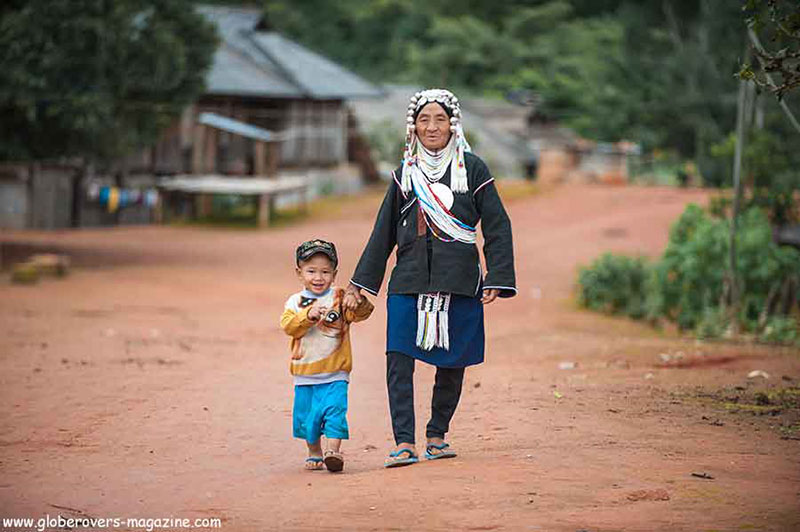
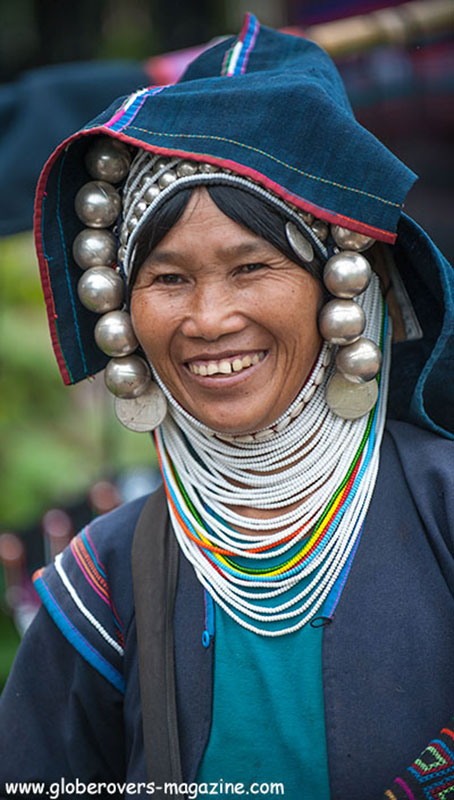
Ahka women like to wear a black blouse, jacket, skirt and leggings. The cuffs of their clothes are often adorned with shiny pieces of metal sewn into it. Their headdresses, which they believe resemble that of a dragon, are the most elaborate among all the hill tribes, and get more elaborate as they grow older. More reminiscent of a crash-helmet, a headdress includes decorations with silverware, beads, metal balls, and even a variety of beads or shells. They constantly wear their headdresses, at home, when working in the fields (often covering it with a scarf), and even when sleeping. They believe that when the headdress is removed, they become vulnerable to misfortunes brought upon by evil spirits.
The design of the headdress differentiates the different Akha villages from one another. The most prominent difference in design is the shape of a small board at the back of the head – which could be square, round, or triangular, or could be a round loop which is worn, in limited numbers, by the Loimwe Akha group. Another variation, the “pointed helmet” headdress, is worn by the Aajao Akha people who live near Maing Kat, to the north of Kyaingtong.
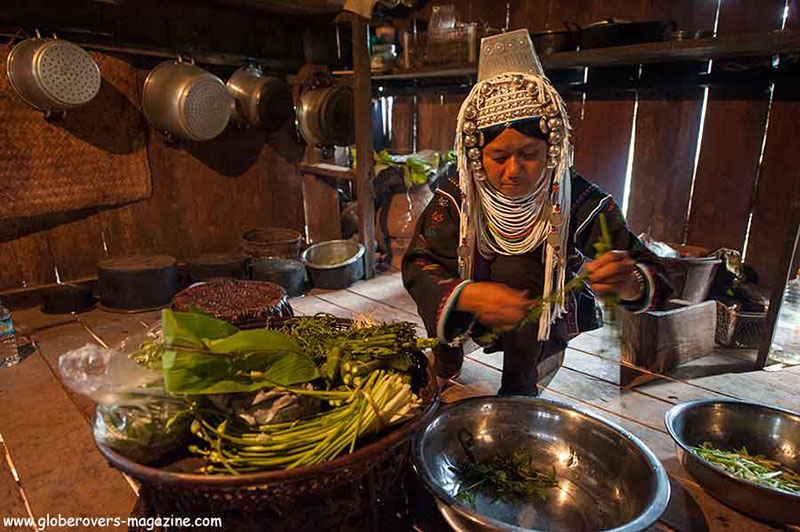
The Akha women are renowned for being kind and very hard working. They do their own spinning of cotton threads, weaving, and dying of cloth with indigo leaves for tailoring their traditional family clothes. Furthermore, the Akha women are very enthusiastic cooks. Before you leave Kyaingtong, make sure to drop by the Kyaingtong Central Market in the village and pick up some fresh meat and green veggies for lunch, as well as a few gifts such as headache tablets, shampoo, and any other practical household items.
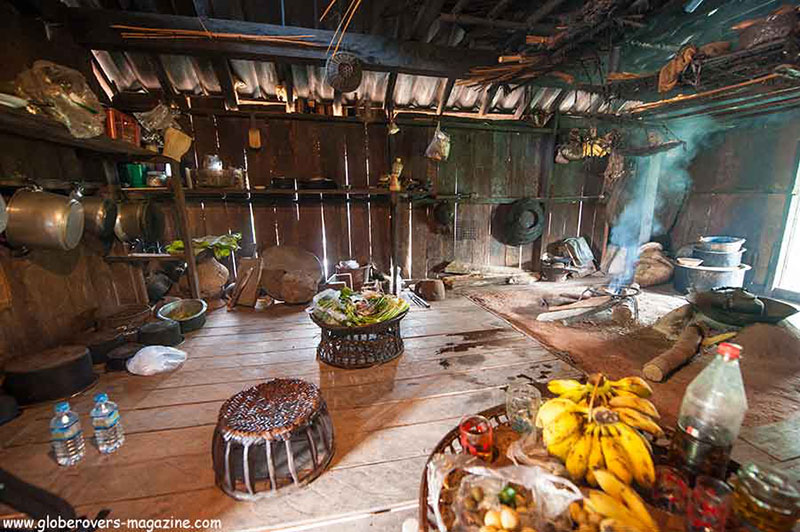
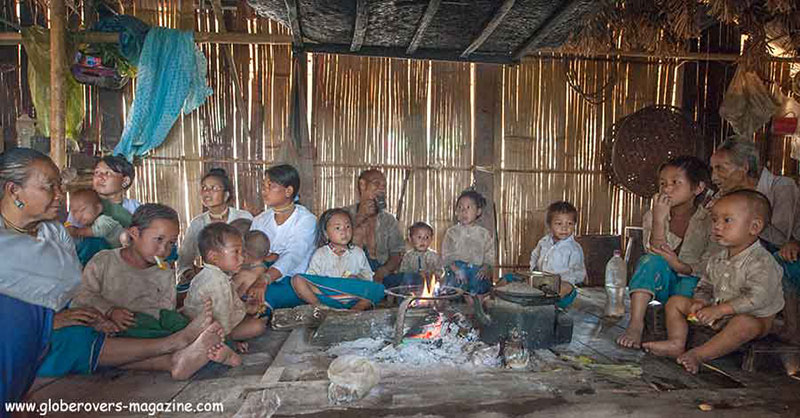
At the village, your guide will find an eager recipient of the gifts and in return, she will make you a sumptuous wok stir-fry lunch with the meat and veggies you brought. The kitchen fire is made in the middle of the kitchen floor with no chimney. Smoke just seeps through the thatched roof of the house. While the food may be a bit oily, it comes with the best intentions. When lunch is finished, leave a small tip discretely on the table. She truly deserves it.
At the village, your guide will find an eager recipient of the gifts and in return, she will make you a sumptuous wok stir-fry lunch with the meat and veggies you brought. The kitchen fire is made in the middle of the kitchen floor with no chimney. Smoke just seeps through the thatched roof of the house. While the food may be a bit oily, it comes with the best intentions. When lunch is finished, leave a small tip discretely on the table. She truly deserves it.
WEST OF Keng Tung : Lahu-shi and Wa tribes
The area to the west of Keng Tung is home to the Lishaw, Wa, and the Lahu tribes. The name “Lahu” means “Tiger Hunters” and originates many centuries ago when this tribe was still living in China. The Chinese Emperor found them to be the best hunters and therefore bestowed upon them the name of Lahu, which means “tiger hunters”. Their two subgroups, the Lahu-na and the Lahu-shi, respectively mean the “black tiger hunters” and the “yellow tiger hunters”. As their forefathers and other humans decimated the tiger population, they can no longer hunt down the tigers, so now focus on hunting the remaining wild animals. They generally live in the hills at over 1,300 m above sea level and live off slash-and-burn farming in addition to their hunting.
The Lahu people are generally polytheistic, believing in more than one religion such as Christianity, Buddhism, and Animism. Most of the Lahu villages have no electricity or running water. Their diet consists mainly of rice, vegetables, and chillies. They are known to be very kindhearted and hospitable to visitors, with men caring well for their wives and children.
A 45-minute drive from Keng Tung in the west-northwest direction will take you to Kong Ma village. This friendly village of the Wa tribe is located in the valley so no hiking is required. While the people here no longer wear their traditional tribal clothes, it’s worth a visit to meet the very active and smiling kids and talkative adults. Unlike the wooden homes standing on stilts in the high hills, the houses here in the valley are constructed from adobe materials such as grass and bamboo encased in an orange clay.
From Kong Ma it is a three-hour hike to one of the Lahu-shi villages, such as Pang Pack village. This village was established eleven years ago and has only 185 people living in 23 very basic houses. About 60% of the Lahu-shi inhabitants are Animists while the remaining people are Buddhists.
The girls here marry around the ages of 13 to 15 and will eventually give birth to no less than three or four babies, and perhaps up to 14. Once married, they will start wearing a little drum-shaped earring through each earlobe which will stretch to epic proportions as they grow older.
The Lahu-shi do not get married outside of their own tribe due to their Animist superstitions and their belief in maintaining their “true untainted bloodline”. If someone does marry outside the tribe, then the newlyweds must move far away from their village. The process of getting married is rather complicated: once a couple decides they want to marry, they inform their parents and ask for consent and blessings. Should the parents agree, they will get married, though no elaborate wedding reception is held. Rather, the immediate family will offer a get-together for the village and offer drinks. At this get-together, they ask for the blessing of the entire village. Once achieved, the man moves in with his wife’s family and they start creating their own family. The groom then has a maximum of ten years to work and save money. Once he has enough money, he needs to buy the following gifts for his wife’s family: 22 Indian coins, 100-200 kg of rice, and 50-60 kg of pigs. If he does not have the money to buy these gifts within ten years, he and his family need to borrow the money. Once the gifts have been delivered and accepted, the village will come together for the official wedding reception. After the reception, the couple is free to live with either the bride’s or the groom’s parents, or they may move into their own house.
Like some other villages, the Lahu-shi women make clothes for the entire village from cloth which they buy in the nearby towns. They no longer weave their own cloth from locally produced cotton as they claim cotton has become hard to grow in their area. The colours of this specific village are beige (or maybe once was white) at the top, and a light blue skirt, pants, or longyi. As the village is quite high in the hills, it gets down to only about 7°C in winter, so their winter clothes need to provide enough protection.
The Lahu-shi people have a strict rule that forbids any alcohol in their village, even Shan-made rice wine. It is perfectly fine to smoke from an early age, including the girls. Locally grown tobacco is carefully rolled into corn leaves or even chestnut leaves. People here only smoke their home-made cigars, so no pipe smokers here. Smoking marijuana is forbidden.
A couple of years ago, with help and funding from volunteers, a water tank was installed about 1 km from the village. This provides clean water for the residents but water needs to be hauled into the village as there is no pipeline installed.
The limited electricity, which is locally generated by the small mountain streams, is just about enough to power up a few small light bulbs in each house. Televisions and other electronics are unheard of, except the odd home has a small radio which they use to tune in to Radio Lahu which transmits from China and Laos in the Lahu language. In addition to updating the villagers on world affairs, the radio station also keeps up the culture with traditional Lahu music. The audience is not small as the Lahu is the second biggest tribe in Shan State, after the Shan people.
While old Chinese phones are cheap, nobody has phones in the village.
Once you walk around in this remote village you will realise that money is very scarce. To generate an income, families cultivate their own domestic animals such as pigs, chickens and buffaloes, in addition to soybeans, peanuts, and corn. Their produce is then sold to other hill tribe villages or to the more affluent Shan villages in the valleys. The man is the head of the household and therefore in charge of the family finances.
If you are lucky, your guide will let you settle down for a rest in one of the larger houses. Don’t be surprised when most of the village’s women and kids follow you into the house. They will sit around you in a large circle while the village chief prepares afternoon tea. Be ready to hand out some small gifts you bought at the Kyaingtong morning market. The people so much appreciate small handouts such as headache tablets, shampoo and healthy snacks. Seeing the many kids enjoying the snacks is such a pleasure. Be sure to bring healthy low sugar snacks which are not individually packed. To avoid littering the villages with plastic packaging, rather take out individually-packed snacks and place them in a larger bag before arriving at the village. Take any plastics or non-reusable containers back to the garbage dumps at Keng Tung.
Before leaving this interesting and very friendly village, make sure to drop by the blacksmith hut to see how these men use their super-hot fire to tamper their big knives and machetes.
NORTH OF KENG TUNG: Akha and Ann tribes
About 90 minutes drive north of Kyaingtong you will find the Lahu-na tribal village of Pin Tauk and further on the Akha village of Wan Pin. The 800 villagers of Wan Pin are mainly Catholic and Baptists who live in about 160 houses. En route, stop over at the village of Wan Kong to see how they distil a very potent alcohol from bags and bags of fermented rice. The workers will scoop out some freshly distilled liquor for you to taste. Take a deep breath. It is very potent!
About two to three hours’ hike uphill from the Akha village of Wan Pin past beautiful views of the valley, lies one of the most interesting hill tribe villages of the region. Pan Lea village is home to the Ann tribe, who prefer to call themselves the Va people, and are believed to be closely related to the Wa tribe. This small village of just 165 people live in 26 houses. They still wear their traditional tribal clothes which are mainly black with coloured buttons and a black headdress with a few white seashells arranged in a straight line at the front.
Like the Wa Ann women at Wan My village to the east of Kyaingtong, the Ann women of Pan Lea also blacken their teeth for similar reasons. Look out for the beautiful black smiles! They chew a variety of nuts such as betel nuts, mixed with crushed limestone and leaves which stain their mouths and teeth with a bright reddish colour. The chewing starts at an age of about 16 to 18 and over time their teeth turn a shiny black. The older women in the village all have almost completely black teeth.
The people still wear their traditional clothes and weave and dye the cloth according to tradition.
The mortality among children is currently at about 30%, mainly from malnutrition. The main causes of death among the adult residents are high blood pressure, and water-borne diseases. High alcohol consumption is also a contributor to death. The average life expectancy is about 65 years.
All people in the village are Animist. Look out for the altar where sacrifices are made to the spirits. Some areas are only open the shaman and those he invites inside. They fear water spirits and therefore build their villages along the mountain ridges, far away from rivers and marshes. Water for household use is piped into the villages through a series of hollow bamboo pipes.
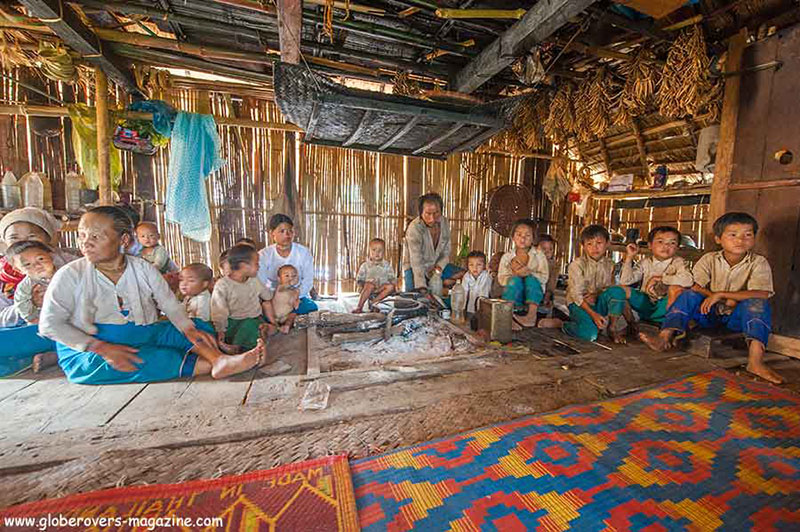
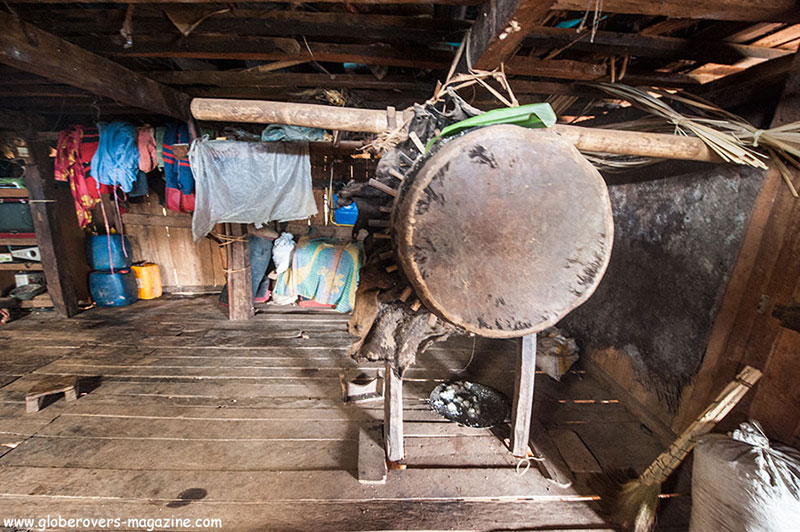
If you visit during a full moon in November you may witness the “Fertility Festival”, which originates from China, where the Ann people originate from. Back then, the larger tribal groups came to steal young girls from the smaller groups. To make up for the shortfall of females in the village, there was an urgent need to create more babies. So as a rule, in November, after the harvest time, animals would be killed and lots of food prepared for the village. On this full moon night, the elders will go through the village to receive food offerings which are then taken to the house of the shaman where the entire village will congregate. The shaman will scatter rice around the large floor on stilts and wine will be served around the shaman’s house where people are sitting grouped by age. The youngest people are not allowed to eat. In the shaman’s house is a large drum which will be beaten while the drunken people dance to the drumbeat.
At this time, he will choose an intoxicated elderly man and summons specific ancestral spirits to come into the man. The spirit (could be a water-, nature-, rice-, mountain-, or tree spirit) will then speak through the elder to make predictions for the village, or address questions about the harvest, rainfall, or any specific issues the village is having to deal with. All evil spirits are strongly avoided. The shaman will also walk around the village to drive out the evil spirits. One of the strongest men in the village will dance with a smaller man and pretend to have sex. This is to teach the young girls about the facts of life. After the show, several couples will get married and then start making babies. This procedure continues to be followed in this village, every November.
After spending a few days hiking around the hills of Shan State and meeting with the friendly hill tribes, you will be so happy you ventured to this part of the world.
It’s important for peace and sustaining development through tourism. It’s important to visit Myanmar. Is it “the right thing” to visit a country that is published in a negative way in the news. Myanmar Tourism Marketing would like to urge tourists worldwide to come and visit the country now as it is the right thing to do to support ALL people living in Myanmar from ALL ethnicities.
Tourism does contribute significantly to poverty reduction (World Tourism Organization) and according to the World Bank, “poverty has declined between 2009-2010 and 2015” World Bank – Myanmar country overview. The World Bank assessment, however, signals that poverty remains substantial. According to the Asia Development Bank and UNDP over 13 million people (or 25% of the population) in Myanmar live below the national poverty line UNDP Myanmar country information and ADB Myanmar country information.
We call on people worldwide to support ALL people of any race, religion or ethnicity in a peaceful way and come and visit Myanmar now as this will help to reduce the poverty all around the country and help to build a peaceful and stable society in Myanmar.
Postponing or canceling trips to Myanmar will hurt the people more.
Just like countries as Canada and Denmark are actively supporting people in Myanmar irrespective of ethnic, political and religious background, Myanmar Tourism Marketing calls for tourist to continue to support Myanmar tourism.
Myanmar stretches over more than 2000 kilometers from north to south and has astonishing nature, culture, and adventure to offer for tourists. It’s also one of the most welcoming and friendly countries in the world and very, very safe to visit as long as you stay within the green areas. The green areas in the map provided by the UK Foreign Office are safe to travel and will easily keep you busy for even up to 6 weeks!
Myanmar Tourism Marketing does hope that people follow the travel advice given by the Myanmar government as well as foreign governments on where to visit safely in Myanmar and get to know the real country and its people for yourself.
We notice that some travelers start to wonder if it’s “the right thing” to visit a country that is published in a negative way in the news. Myanmar Tourism Marketing would like to urge tourists worldwide to come and visit the country now as it is the right thing to do to support All people living in Myanmar from All ethnicities.
The World Bank assessment, however, signals that poverty remains substantial. According to the Asia Development Bank and UNDP over 13 million people (or 25% of the population) in Myanmar live below the national poverty line and (https://www.adb.org/countries/myanmar/poverty).
We call on people worldwide to support All people of any race, religion, or ethnicity in a peaceful way and come and visit Myanmar now as this will help to reduce the poverty all around the country and help to build a peaceful and stable society in Myanmar. Postponing or canceling trips to Myanmar will hurt the people more.
Just like countries such as Canada and Denmark are actively supporting people in Myanmar irrespective of ethnic, political, and religious background (http://pm.gc.ca/eng/news/2017/09/13/prime-minister-justin-trudeau-speaks-state-counsellor-daw-aung-san-suu-kyi-myanmar and https://www.mmtimes.com/news/denmark-donates-32m-aid-myanmar.html), Myanmar Tourism Marketing calls for tourist to continue to support Myanmar tourism.
Please do feel free to share this message with your travel agents and travelers as it’s important that people realize Myanmar continues to be a very safe country to visit.
We look forward to your support and please do not hesitate to contact us if you require any further assistance.
Are you planning to travel to Myanmar? Our travel experts are ready to assist you, get in touch now.
This article is written by Hugh Morris (@horatiomo) on ” The Telegraph” on 18 Sept 2017. Pro Niti Travel is very proud to share.
Travellers should keep visiting Myanmar (Burma) despite the conflict taking place in the north of the country, which has been described by the UN as having the trademarks of ethnic cleansing.
This is the view of one tour operator that says trips to the south-east Asian country are both safe and morally sound.
What is happening in Myanmar?
The Burmese military has launched an offensive against Rohingya “extremists” in Rakhine state, with many of the international community concerned Muslim civilians are being targeted in the Buddhist-majority country.
Violence has engulfed the Bangladeshi border region in recent weeks, with reports emerging of Rohingya villages being razed to the ground and civilians being cut down as they attempt to flee.
The United Nations has branded the offensive a “textbook example of ethnic cleansing”.
Last week the Foreign Office (FCO) said there was a “significant risk of intercommunal violence in Rakhine”, to which it advises against all but essential travel – as it has for a number of years.
“This is due to continued tension following serious civil unrest in 2012 and a continued risk of armed conflict and the threat of landmines in the northern areas,” it said, citing outbreaks of violence every year since.
“In late August and early September 2016, security operations in northern Rakhine have involved the clearance of villages and mass displacement of populations,” it added.
Do tourists visit Rakhine – and should I cancel my trip to Myanmar?
Few visit the western region, many to see the ancient abandoned city of Mrauk U, the capital of the powerful Mrauk U kingdom from 1430 to 1785.
“None of the areas on our itineraries are in any way impacted by the current problems,” said Liddy Pleasants, managing director of Stubborn Mule Travel. “Ngapali Beach is in Rakhine State but in the far south and around 500km away from where the violence is occurring.
“Some clients are concerned about visiting Burma from a moral point of view during the current troubles. This is a more difficult personal decision. Our own view is that avoiding travel to Burma does not achieve anything and can, in fact, be to the detriment of the country as a whole.[/fusion_text][fusion_text]“Large parts of the country now rely on tourism to a very great degree. In the past, much of the tourist infrastructure was owned by the government and there was a compelling argument that a tourist embargo would help avoid giving money to the government and therefore help bring about change.
“However, this is no longer the case; the vast majority of hotels and restaurants are now privately owned, and employ local people. Guides are self-employed or work for privately owned tourist enterprises. Drivers again mostly work for privately owned tourist enterprises. Taxi drivers, porters, waiters, souvenir sellers, ticket vendors, hawkers, craftsmen and many more derive all of their income from tourists and would find their livelihood very adversely affected if the tourists stop coming. It is our opinion that avoiding travel to Burma will have little impact on the government and the military but a more profound impact on local people.”
Where in the country is most popular with tourists?
“The setting is sublime,” says regular Telegraph Travel contributor Tim Jepson, “a verdant 26 square-mile plain, part-covered in stands of palm and tamarind caught in a bend of the lazy-flowing Irrawaddy (Ayeyarwady) river and framed by the hazy silver-grey of distant mountains.
“Rising from the plain’s canopy of green are temples, dozens of them, hundreds of them, beautiful, other-worldly silhouettes that were built by the kings of Bagan between 1057 and 1287, when their kingdom was swept away by earthquakes and Kublai Khan and his invading Mongols.”
Inle Lake and the beast resort of Ngapali are popular, too, as well as cruises on the Irrawaddy river.
Does the Foreign Office advise against travel to anywhere else in the country?
In addition to Rakhine State, the FCO also advises against all but essential travel to Shan State and Kachin State, further to the north.
The FCO says: “The Foreign and Commonwealth Office (FCO) advise against all but essential travel to Rakhine State except the southern townships (administrative areas similar to a borough or county) of Kyaukpyu, Ramree, Munaung, Toungup, Thandwe (including the tourist resort of Ngapali) and Gwa.
“The FCO advise against all but essential travel to Shan State (North), except Lashio town (which includes the airport), Kyaukme town, Hsipaw town, and the train line from Mandalay to Lashio.
“The FCO advise against all but essential travel to Kachin State (except the towns of Myitkyina, Bhamo and Putao) due to continued risk of armed conflict.”
It adds: “The situation in ethnic states where armed groups operate is volatile. There is ongoing conflict in the north of Shan State, and in Kachin State and there remains the possibility of violent clashes in other ethnic states.”
Now that you are ready to visit our beautiful country with its cultural diversity, ancient history, YOLO experiences such as ballooning over Bagan, relaxation at beautiful beaches, and adventure treks to explore the scenic landscape and hill tribes, here are what you should pack for your Myanmar travels.
Stomach tablets
Myanmar is a developing country so food hygiene is not always up to the standards of developed countries. Thi is particularly true for street food and some local restaurants. However, our guides will attempt to bring you to the best and safest restaurants possible.
Laphet Thoke (Tea leaves salad)
Insect spray
Most of Myanmar lies in a tropical region, so if you are afraid of insects such as mosquitoes, then don’t forget the mozzie spray.
A Headlamp
Myanmar is now more developing and with fewer power cuts than a few years ago. However, power cuts still happen, especially in rural areas. Moreover, if you like to venture out in the dark, then make sure to carry your headlamp.
Sunset in Magical Bagan, Myanmar
Comfortable but culturally sensitive clothes
Myanmar is a country of with a strong Buddhist culture. Many places you will visit will not allow you to wear short pants or short skirts or showing too much flesh anywhere such as bare shoulders. Pack clothes that would cover your shoulders and knees. For hiking, you can dress more relaxed but again don’t bare too much as we visit conservative but very friendly, villages.
Flip-flops (thongs) or sandals
When visiting religious sites, monasteries, or local homes, you need to take off your shoes. Much easier to remove flip-flops than boots. Don’t forget the hiking shoes, too if you are trip include trekking/hiking.
Sunscreen and a hat
Even if you are visiting during the winter season, the temperature will be around 20 TO 25 degrees Celsius and the sun can be brutal. Bring sunscreen and a hat that to protect your skin. We will provide water bottle for free.
Some warm clothes
Night buses are often air-conditioned to arctic temperatures so better pack a light sweater to keep you warm. Moreover, in some areas such as the far north and around Inle Lake area, it can get quite cool. Winter months are December to till the end of February and many destinations get very cool at night.
Monks at Mahagandayon monastery, Amarapura
Fresh cash (Major currencies such as USD and EURO in great condition)
Until recently, tourists had to change foreign currency on the black market. Nowadays, you can charge money in official exchanges shops or banks at the airports or in major destinations. Torn, stained or old notes may be rejected or possibly accepted at a much-reduced exchange rate. Best to bring fresh money.
Foreign Currency
Anything else? If you have been to Myanmar, let us know what other items you feel are indispensable for tourists.
Happy travels in Myanmar. We know you will love it. Have questions about Myanmar, please write to us. If you like to customize your travel to Myanmar, just give a shouthere.
Planning trip to Myanmar? Our travel experts are ready to assist you, get in touch now.
This article is written by Marissa Carruthers (@LittleMsChief) on TTG Asia on 13 Sept 2017.
Travellers are being urged not to give up on Myanmar amid ongoing violent clashes in northern Rakhine State, even as travel advisories are being issued and some cancellations are already being recorded.
The anxious trade is sending out a ‘Myanmar is safe’ message. The mounting conflict has led to several travel warnings against visiting Rakhine State, where troubles are mainly focused on the townships of Maungdaw, Buthidaung and Rathedaung.
This week, Myanmar Tourism Marketing published a map from the UK Foreign Office highlighting green safe areas to visit in the country, with the main tourist hubs of Yangon, Mandalay, Bagan and Inle Lake all well within safe parameters.
Border areas including Rakhine, Kachin Northern Shan are off-limits.
May Myat Mon Win, Myanmar Tourism Marketing chairwoman, said: “We hope for a speedy and peaceful resolution of the situation in Northern Rakhine. Meanwhile, we would like to assure travellers that Myanmar’s key tourist destinations and cities are safe.”
Edwin Briels, managing director of Khiri Travel Myanmar, said while the international headlines making their way across the globe will undoubtedly have an impact on the country’s fledgling tourism industry, he added Myanmar has always had restricted areas. He reiterated the majority of the country remains safe to visit.
He said: “The Myanmar government has always been very concerned about the safety of foreigners visiting the country and it is impossible to accidentally travel to a restricted area. I do think that Myanmar continues to be one of the safest places on earth to travel.”
However, some operators are already reporting cancellations, with one source adding: “If this situation continues, we will see the number of visitors for this high season drop. Also, as booking season is now, travellers will not now commit to a Myanmar trip next year.”
It is feared the real effects on the industry will be felt in 2018.
However, Briels added that the “ethical thing” for tourists to do now is “not to give up on Myanmar”. “Continue to visit the country in a sustainable way to support all people from all races and religions,” he added.
With reference to recent happenings at Northern Rakhine areas, the Ministry of Hotels & Tourism would like to advise the member travel agencies and tourism companies how best to answer in case they are questioned by their overseas travel agents and clients. We would appreciate if you could review this message and kindly advise and guide us on the most suitable approach.
The Ministry of Hotels & Tourism joins the Republic of the Union of Myanmar Anti-terrorism Central Committee, the United Nations and the many foreign governments in condemning the attacks on police posts in Rathedaung Township close to the Bangladesh border last Friday. It happened in an area that has always been closed for tourism.
Myanmar continues to be a very safe country for foreign tourists and currently, continuous arrival of tourists through international airports, seaports and border gates, we do urge travelers to stay always within the permitted areas as indicated on the website of the Ministry of Hotels and Tourism http://tourism.gov.mm/en_US/information/permitted-area/ .
All tourist sites including sunny Ngapali beach and the ancient temple ruins of Mrauk U continue to be safe to travel. The weather all over Myanmar is excellent so don’t wait for the high season but visit now.
Follow the Ministry of Hotels & Tourism for regular updates about tourism in Myanmar at www.facebook.com/moht.mm .
Planning to travel Myanmar? Our travel experts are ready to assist you, get in touch now.